Learn about intellectual disability in children, including symptoms, types, intellectual and adaptive functioning, assessment, associated conditions and support needs.
Intellectual Disability (Intellectual Developmental Disorder): Symptoms, Types, Assessment & Support
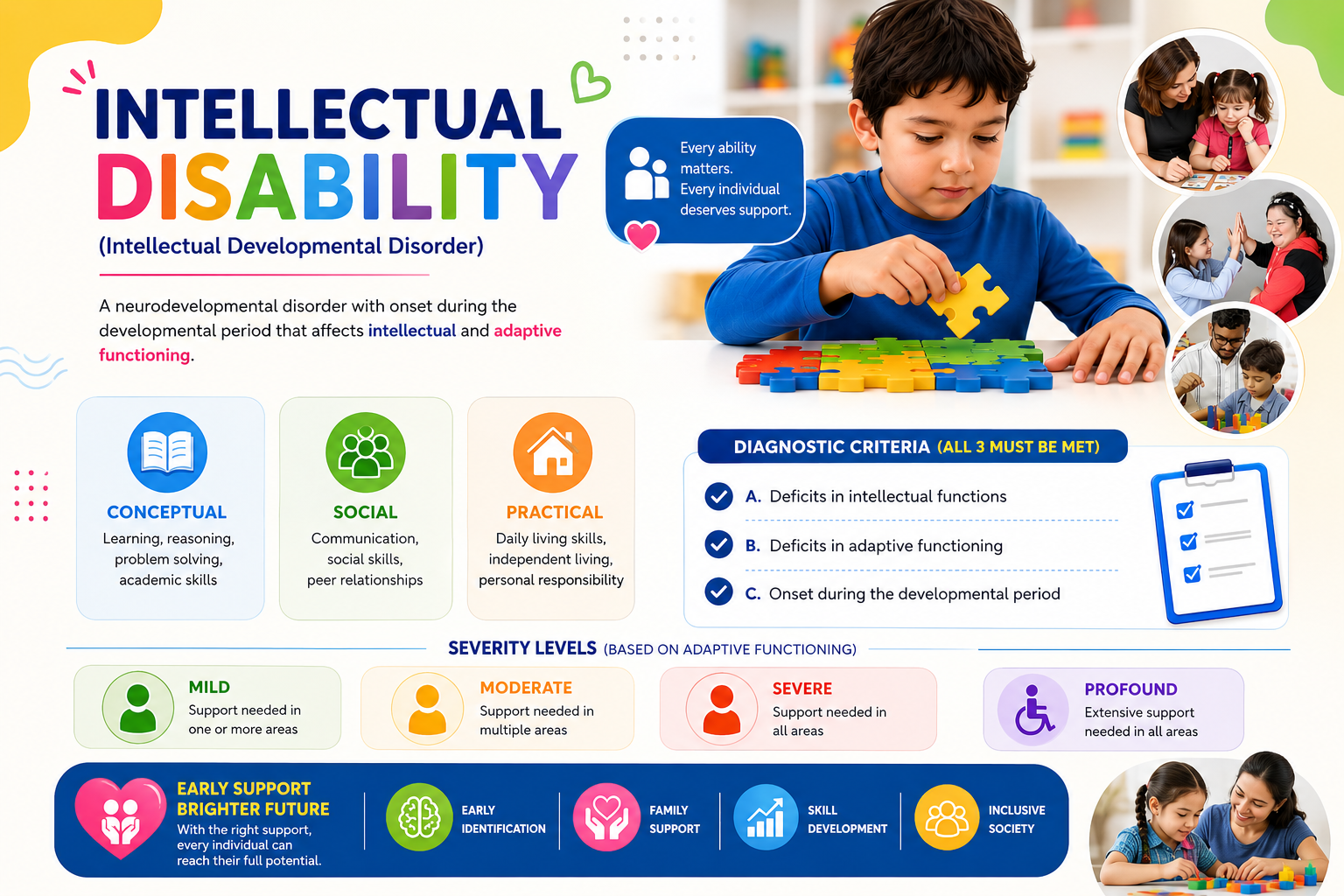
Intellectual Disability (ID), also known as Intellectual Developmental Disorder (IDD), is a neurodevelopmental condition that begins during the developmental period and affects intellectual functioning and adaptive functioning.
Children and adults with intellectual disability may experience difficulties with learning, reasoning, problem-solving, communication, social skills and everyday activities. The level of support required can vary considerably from one individual to another.
-
What Is Intellectual Disability?
ID is characterized by difficulties in intellectual functioning and adaptive functioning that begin during the developmental period.
Intellectual functioning can involve:
- Reasoning
- Problem-solving
- Planning
- Abstract thinking
- Judgment
- Academic learning
- Learning from experience
- Practical understanding
Adaptive functioning refers to how effectively a person manages everyday activities and meets age-appropriate expectations in areas such as communication, social participation and independent living.
Intellectual Disability in Children
ID may become noticeable during early childhood when a child experiences delays or difficulties in developmental and learning skills.
A child may require additional support with:
- Learning new concepts
- Communication
- Academic skills
- Social interaction
- Problem-solving
- Daily living activities
- Understanding instructions
- Managing age-appropriate responsibilities
The way intellectual disability presents can vary depending on the child’s developmental profile and level of adaptive functioning.
-
Signs and Symptoms of Intellectual Disability
1. Difficulties With Intellectual Functioning
Children may experience difficulties with:
- Reasoning
- Problem-solving
- Planning
- Learning from instruction
- Learning from experience
- Abstract thinking
- Academic learning
- Practical understanding
These difficulties can affect learning and everyday functioning.
2. Difficulties With Adaptive Functioning
Adaptive functioning involves the practical skills needed to participate in everyday life.
Difficulties may occur in:
- Communication
- Social participation
- Personal independence
- Daily living skills
- Academic functioning
- Money management
- Time management
- Community participation
- Safety awareness
The level of difficulty and support required can vary according to the individual’s developmental profile.
-
Areas Affected by Intellectual Disability
ID can affect three broad areas of adaptive functioning.
1. Conceptual Skills
Conceptual skills may include:
- Reading
- Writing
- Mathematics
- Understanding time
- Understanding money
- Planning
- Memory
- Problem-solving
- Academic learning
School-age children may require additional support to meet age-related academic expectations.
2. Social Skills
Social functioning may involve difficulties with:
- Understanding social cues
- Communication
- Conversation
- Language
- Social judgment
- Emotional regulation
- Understanding social risks
- Developing age-appropriate social behaviour
Some individuals may have difficulty understanding unsafe social situations or may be more vulnerable to manipulation by others.
3. Practical Skills
Practical functioning includes everyday activities such as:
- Personal care
- Household activities
- Transportation
- Shopping
- Food preparation
- Money management
- Health-related decisions
- Community activities
- Vocational skills
The amount of support required depends on the individual’s abilities and level of adaptive functioning.
-
Types and Severity of Intellectual Disability
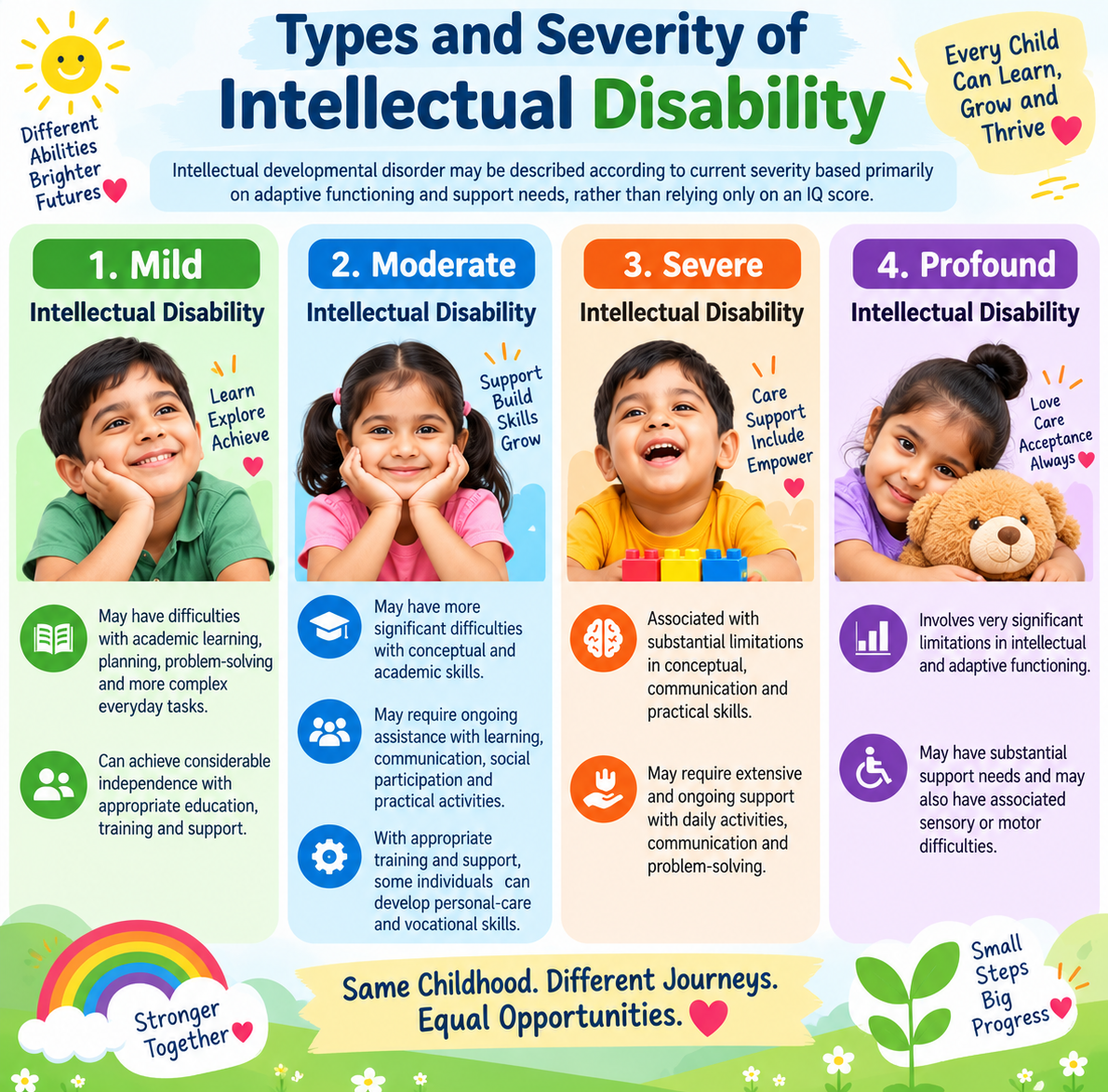
Intellectual developmental disorder may be described according to current severity based primarily on adaptive functioning and support needs, rather than relying only on an IQ score.
1. Mild Intellectual Disability
Children with mild intellectual disability may experience difficulties with academic learning, planning, problem-solving and more complex everyday tasks.
Some individuals may achieve considerable independence with appropriate education, training and support.
2. Moderate Intellectual Disability
Individuals with moderate intellectual disability may have more significant difficulties with conceptual and academic skills.
They may require ongoing assistance with learning, communication, social participation and practical activities. With appropriate training and support, some individuals can develop personal-care and vocational skills.
3. Severe Intellectual Disability
Severe intellectual disability is associated with substantial limitations in conceptual, communication and practical skills.
Individuals may require extensive and ongoing support with daily activities, communication and problem-solving.
4. Profound Intellectual Disability
Profound intellectual disability involves very significant limitations in intellectual and adaptive functioning.
Individuals may have substantial support needs and may also have associated sensory or motor difficulties.
-
How Is Intellectual Disability Diagnosed?
IDdiagnosis involves assessment of both intellectual functioning and adaptive functioning, along with consideration of when developmental difficulties began.
1. Clinical Assessment
A comprehensive assessment may include:
- Developmental history
- Medical history
- Family history
- Clinical assessment
- Intellectual or cognitive testing
- Adaptive functioning assessment
- Communication assessment
- Academic assessment
- Behavioural assessment
- Information from parents or caregivers
- Assessment across different environments
The supplied material emphasizes that diagnosis is based on clinical assessment together with standardized assessment of intellectual and adaptive functioning.
2. Intellectual and Cognitive Assessment
Standardized, individually administered intelligence tests may be used to assess intellectual functioning.
However, test results should be interpreted by appropriately trained professionals. Factors such as language, culture, communication difficulties, sensory conditions and motor difficulties can influence test performance.
3. Adaptive Functioning Assessment
Adaptive functioning assessment looks at how a child or adult manages everyday life.
It may consider:
- Communication
- Social skills
- Personal care
- Learning
- Independence
- Safety
- Household activities
- Community participation
Adaptive functioning is particularly important because it helps determine the level of support an individual may need.
-
Intellectual Disability and Autism
ID can occur alongside Autism Spectrum Disorder (ASD).
Assessment can sometimes be more challenging in children with autism because social communication and behavioural differences may affect their ability to understand or participate in standardized testing.
The supplied material emphasizes the importance of appropriate assessment and reassessment during development when intellectual disability and autism occur together.
1. Intellectual Disability and Learning Difficulties
ID and specific learning disorders are not the same condition.
A specific learning disorder primarily affects particular areas of learning, while intellectual disability involves broader difficulties in intellectual and adaptive functioning.
Both conditions can occur together when the diagnostic criteria for each are met.
2. Conditions Associated With Intellectual Disability
Intellectual disability can occur alongside other neurodevelopmental, mental health or medical conditions.
Associated conditions discussed in the supplied material include:
- ADHD
- Autism Spectrum Disorder
- Anxiety disorders
- Depressive disorders
- Bipolar disorders
- Communication disorders
- Tic disorders
- Stereotypic movement disorder
- Epilepsy
- Cerebral palsy
- Other medical conditions
Co-occurring conditions may influence assessment, development, behaviour and support needs.
-
Global Developmental Delay
Global Developmental Delay (GDD) is used in young children when developmental difficulties are present across several areas but the severity of intellectual developmental disorder cannot yet be reliably assessed.
The supplied material describes this category as applying to children under 5 years when systematic assessment of intellectual functioning is not yet possible or reliable. Reassessment may be required as the child develops.
-
Intellectual Disability Support for Children
Support should be based on the child’s individual strengths, developmental needs and level of adaptive functioning.
1. Educational Support
Children may benefit from:
- Individualized learning strategies
- Special education support
- Remedial education
- Classroom accommodations
- Structured learning activities
- Repetition and practice
- Visual learning supports
2. Communication Support
Depending on the child’s needs, support may include:
- Speech and language therapy
- Communication training
- Alternative and augmentative communication
- Social communication activities
3. Daily Living Skills Training
Children can be supported in developing practical skills such as:
- Personal hygiene
- Dressing
- Eating
- Toileting
- Organizing belongings
- Following routines
- Safety awareness
4. Social Skills Development
Support can focus on:
- Understanding social cues
- Turn-taking
- Communication
- Sharing
- Appropriate social behaviour
- Emotional regulation
- Developing relationships
-
Therapies and Educational Interventions
A child’s intervention plan should be individualized according to their developmental profile.
Depending on the child’s needs, multidisciplinary support may include:
- Remedial therapy
- Occupational therapy
- Speech and language therapy
- Behavioural interventions
- Social skills training
- Special education
- Parent training
- Life-skills training
The goal is to improve functional abilities, participation, communication and independence.
Role of Parents and Caregivers
Parents and caregivers play an important role in supporting children with intellectual disability.
They can help by:
- Maintaining consistent routines
- Encouraging communication
- Practicing daily living skills
- Supporting learning at home
- Reinforcing positive behaviour
- Working with therapists and teachers
- Monitoring developmental progress
- Providing a supportive environment
Regular communication between parents, educators and therapists can help create a consistent support plan.
-
Intellectual Disability Across the Lifespan
Intellectual disability begins during the developmental period but support needs may change as a person grows.
1. Early Childhood
The focus may include:
- Developmental assessment
- Communication
- Early learning
- Play skills
- Daily living skills
- Parent guidance
2. School Age
Support may focus on:
- Academic learning
- Communication
- Social development
- Behaviour
- Adaptive skills
- Independence
3. Adolescence
Important areas may include:
- Life skills
- Social relationships
- Emotional development
- Vocational preparation
- Safety
- Independence
4. Adulthood
Support may include:
- Employment or vocational training
- Independent living skills
- Community participation
- Money management
- Health-related decision-making
- Social relationships
-
Importance of Early Assessment and Intervention
Early identification can help families understand a child’s developmental needs and plan appropriate educational, therapeutic and social support.
Assessment should consider the child’s individual abilities, communication, adaptive functioning, environment and developmental progress rather than relying on a single test score.
-
When Should Parents Seek an Assessment?
Parents may consider a developmental assessment when a child has persistent difficulties with:
- Learning
- Communication
- Developmental milestones
- Problem-solving
- Daily living skills
- Social interaction
- Academic skills
- Understanding instructions
- Age-appropriate independence
A qualified developmental, psychological or mental-health professional can determine whether further assessment is appropriate.
-
Frequently Asked Questions About Intellectual Disability
1. What is Intellectual Disability?
Intellectual Disability is a neurodevelopmental condition involving difficulties with intellectual and adaptive functioning that begin during the developmental period.
2. What are the signs of Intellectual Disability in children?
Signs may include difficulties with learning, reasoning, problem-solving, communication, social skills, academic development and everyday adaptive skills.
3. Is Intellectual Disability the same as Autism?
No. Intellectual Disability and Autism Spectrum Disorder are different neurodevelopmental conditions. However, they can occur together.
4. Can a child with Autism also have Intellectual Disability?
Yes. Intellectual disability can occur alongside autism, and assessment may require special consideration of the child’s communication and behavioural profile.
5. How is Intellectual Disability diagnosed?
Diagnosis involves clinical assessment along with standardized assessment of intellectual and adaptive functioning.
6. Is IQ the only factor used to determine severity?
No. The supplied material emphasizes that severity is determined primarily by adaptive functioning and support needs, rather than IQ scores alone.
7. What are the different levels of Intellectual Disability?
The commonly described severity levels are:
- Mild
- Moderate
- Severe
- Profound
The level of support required varies from person to person.
8. Can Intellectual Disability improve?
Developmental abilities and functional skills can improve with appropriate education, therapy, training and support. The individual’s level of independence and support needs may change over time.
9. What support can help a child with Intellectual Disability?
Depending on individual needs, support may include special education, remedial education, speech and language therapy, occupational therapy, behavioural interventions, social skills training and life-skills training.
Watch this video to know about Intellactual Disability click here
-
Conclusion
Intellectual Disability is a developmental condition that can affect intellectual abilities and everyday adaptive functioning. Children may require different levels of educational, therapeutic, social and family support depending on their individual strengths and needs.
Early assessment, individualized education and appropriate developmental support can help children build communication, learning, social and daily living skills and participate more effectively in family, school and community life.