Learn about Learning Disability (LD), including dyslexia, dysgraphia and dyscalculia, common signs, diagnosis, assessment and professional support for children at Nirmal Autism Learning & Disability Education Center, Miraj.
Learning Disability (LD) in Children
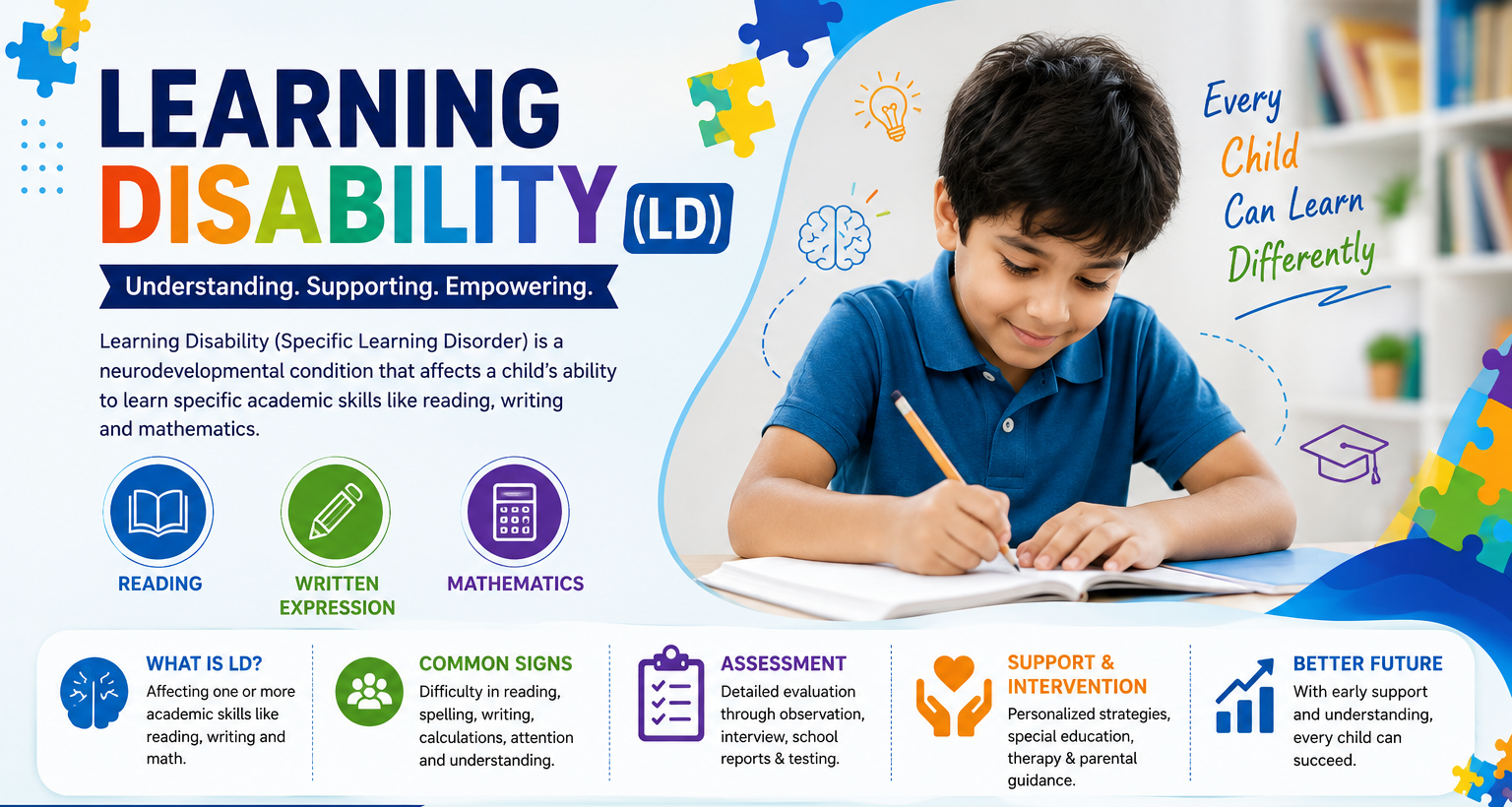
Learning Disability, commonly referred to as Specific Learning Disorder (SLD), is a group of neurodevelopmental conditions that can affect a child’s ability to learn specific academic skills. Difficulties may involve reading, writing and mathematics and are typically identified during the school years, although some individuals may not be recognized until adulthood.
Learning difficulties can significantly affect academic performance and, when not appropriately identified and supported, may interfere with a child’s adaptation at school and in everyday life.
What Is Specific Learning Disorder?
Specific Learning Disorder is an umbrella term for neurodevelopmental disorders characterized by persistent difficulties in acquiring particular academic skills.
The main areas affected include:
- Reading
- Written expression
- Mathematics
- More than one academic area
The difficulties are considered in relation to the child’s age and expected academic performance and should not be explained solely by environmental factors or other conditions.
Types of Learning Disability
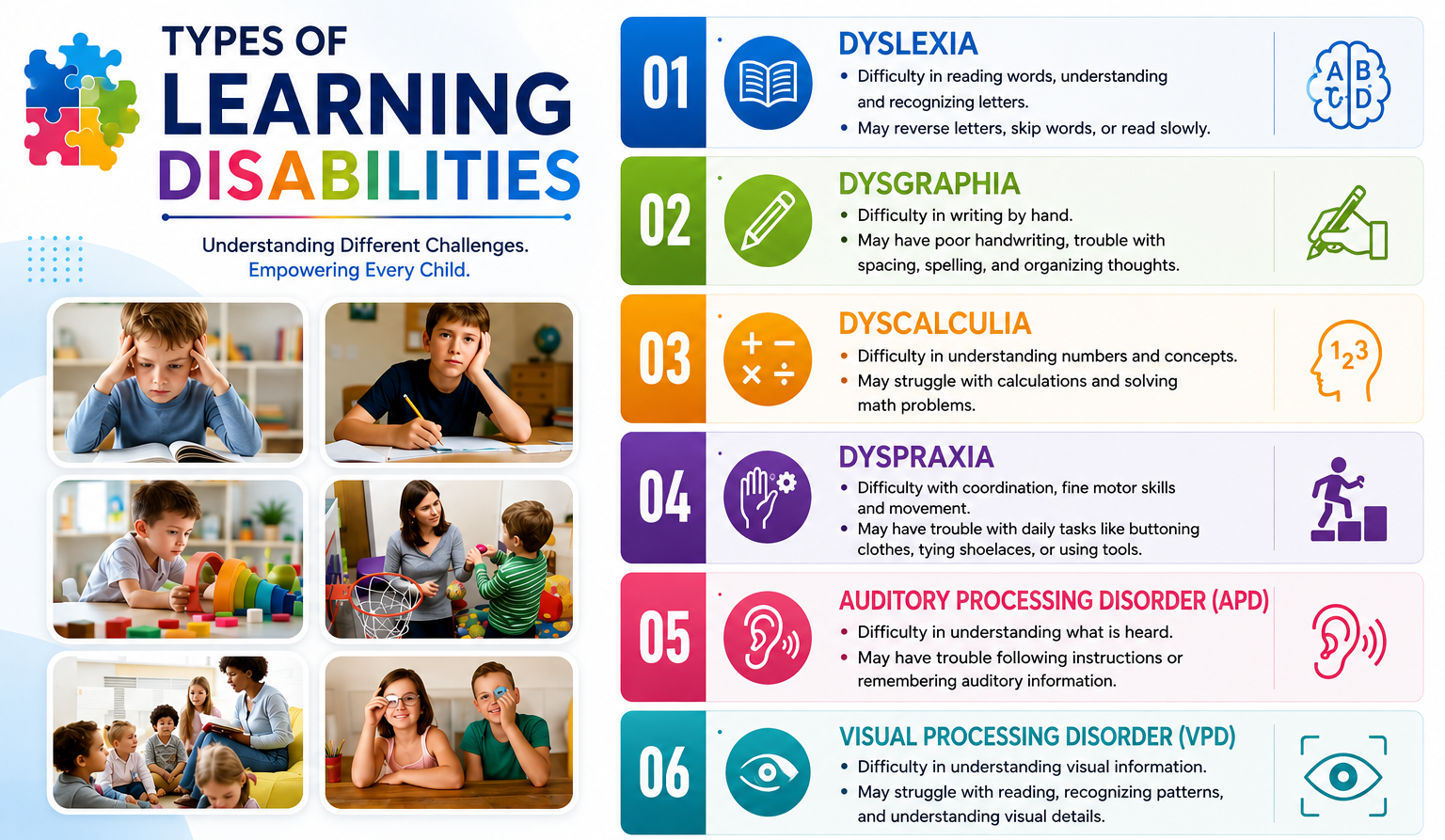
1. Dyslexia – Difficulty With Reading
Dyslexia is associated with difficulties in reading skills, which may include:
- Word-reading accuracy
- Reading fluency
- Reading comprehension
- Reading speed
2. Dysgraphia – Difficulty With Written Expression
Dysgraphia refers to difficulties affecting written expression, including:
- Spelling accuracy
- Grammar
- Punctuation
- Organization of written expression
- Clarity and organization of writing
3. Dyscalculia – Difficulty With Mathematics
Dyscalculia involves difficulties with mathematical skills such as:
- Number sense
- Memorizing arithmetic facts
- Calculation
- Mathematical reasoning
- Applying mathematical concepts
Common Signs of Learning Disability in Children
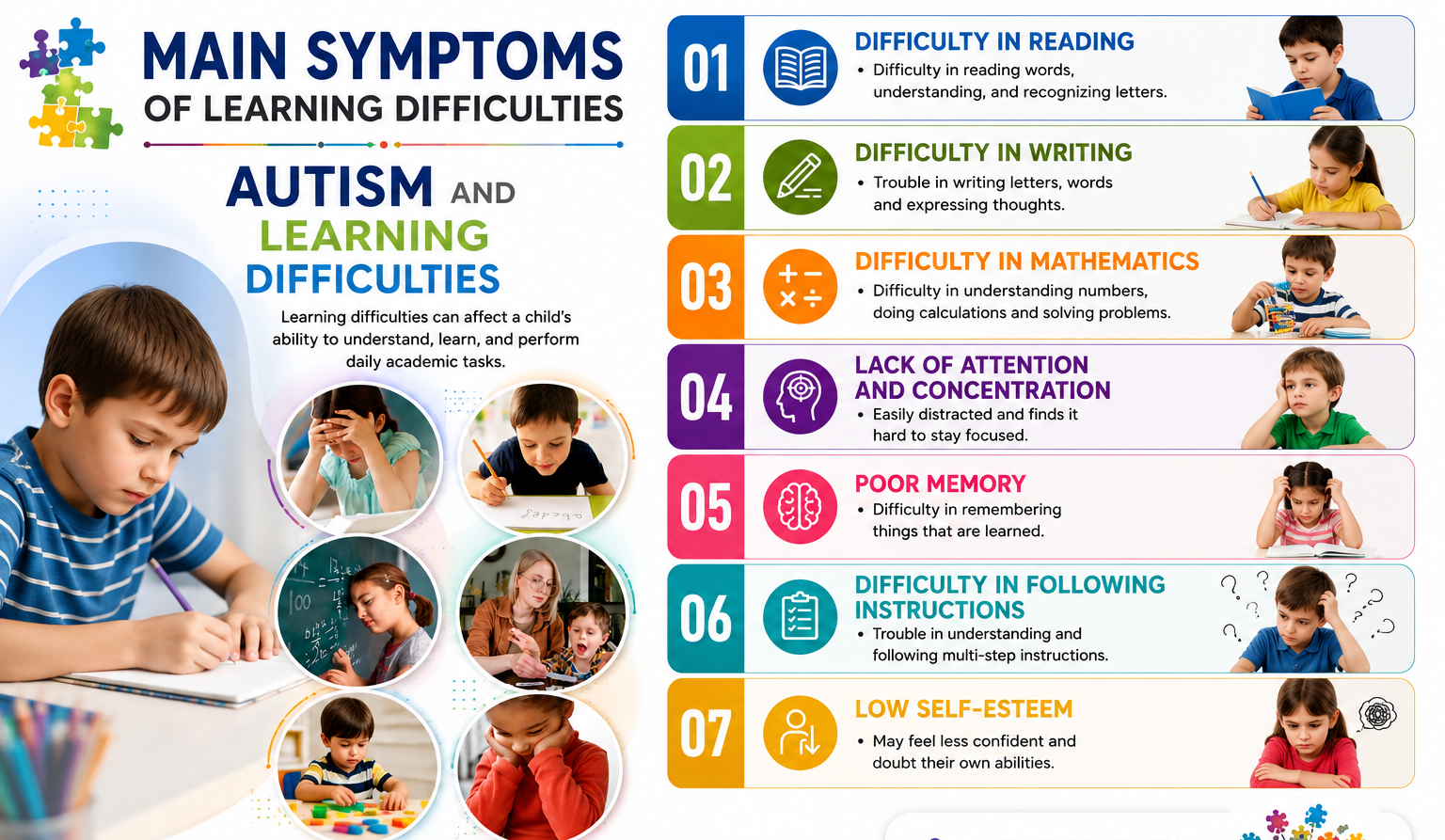
A child with a learning disability may experience persistent difficulties with one or more academic skills.
1. Reading Difficulties
- Reading slowly or inaccurately
- Difficulty understanding what is read
- Difficulty with reading fluency
- Difficulty recognizing or reading words accurately
2. Writing Difficulties
- Frequent spelling errors
- Problems with grammar and punctuation
- Difficulty organizing written work
- Difficulty expressing ideas clearly in writing
3. Mathematics Difficulties
- Difficulty understanding numbers
- Difficulty remembering arithmetic facts
- Problems with calculations
- Difficulty solving mathematical problems
These difficulties are particularly important when they persist despite targeted educational support.
Watch our video on “Learning Disability in Children: Important Signs Parents Should Know” to understand the common signs of learning difficulties in children.
When Should Parents Seek Professional Assessment?
Parents and teachers should consider professional assessment when a child continues to struggle academically despite appropriate teaching and targeted support.
According to the reference material, SLD assessment considers difficulties that persist for at least six months despite targeted help, along with academic performance substantially below what would be expected for the child’s age.
Early identification can help determine the child’s specific learning needs and guide appropriate educational and supportive interventions.
How Is Learning Disability Diagnosed?
Learning Disability is not diagnosed simply because a child receives low marks.
A comprehensive assessment may involve:
1. Clinical Observation
Understanding how the child learns, communicates and performs academic tasks.
2. Parent and Child Interview
Gathering information about developmental history, learning difficulties and everyday functioning.
3. Family History
Reviewing relevant family history.
4. School Reports
Understanding the child’s academic performance and difficulties in the school environment.
5. Neuropsychological Testing
Neuropsychological testing may be used to understand the child’s specific difficulties and help identify appropriate ways to support the individual.
Why Differential Diagnosis Is Important
Learning difficulties can sometimes occur alongside or be confused with other conditions. Therefore, assessment should consider possible contributing factors.
These may include:
- Intellectual disability or borderline intellectual functioning
- ADHD
- Autism spectrum disorder
- Psychiatric disorders
- Hearing impairment
- Visual impairment
- Neurological conditions
- School absenteeism
- Inadequate educational facilities
- Language differences between the child’s mother tongue and school medium
- Environmental or educational factors
Learning Disability and Other Mental Health Conditions
Some children with SLD may also experience emotional, behavioural or psychiatric difficulties. The reference material discusses associations with conditions including ADHD, anxiety, depression and other behavioural or emotional problems.
This is why a comprehensive assessment should consider the child’s academic, emotional, behavioural and developmental needs, rather than focusing only on school performance.
Severity of Specific Learning Disorder
The reference document describes three levels of severity:
1. Mild
Some difficulties are present in one or two academic areas, and the child may be able to compensate.
2. Moderate
There are significant learning difficulties requiring specialized teaching, accommodations or supportive services.
3. Severe
Learning difficulties affect several academic areas and require ongoing, intensive specialized teaching.
Learning Disability Assessment at Nirmal Hospital
At Nirmal Hospital, Miraj, children experiencing persistent academic difficulties can be evaluated to understand the areas in which they need support.
The assessment process can help identify difficulties related to:
- Reading
- Writing
- Mathematics
- Attention and learning
- Comprehension
- Academic performance
- Associated developmental or psychological concerns
Support and Intervention for Learning Disability
Learning Disability requires appropriate educational and supportive intervention based on the child’s individual needs.
The reference document describes a Response to Intervention approach:
1. Tier 1 – Classroom Support
Regular classroom teaching and appropriate educational support.
2. Tier 2 – Additional Support
Classroom teaching combined with small-group supplemental intervention.
3. Tier 3 – Individualized Intervention
More intensive and individualized intervention for children who continue to struggle.
The goal is to understand the child’s specific difficulties and provide appropriate support rather than simply labeling the child as “weak in studies.”
Learning Disability Is Not a Sign of Low Intelligence
Learning difficulties should be understood in the context of a child’s overall development and academic profile.
The reference material notes the historical recognition that children with SLD may have average or above-average IQ, highlighting the importance of distinguishing specific academic difficulties from general intellectual ability.
Can Learning Disability Improve?
Specific Learning Disorders often improve with appropriate treatment and intervention, although difficulties may persist in a less severe form into adulthood for some individuals.
Early recognition, appropriate educational intervention and continued support can help children develop strategies to manage their learning difficulties.
Remedial Therapy can provide individualized educational support to help children work on specific learning difficulties.
Learn more about our Remedial Therapy for Children and how it can support children with learning difficulties.
Frequently Asked Questions About Learning Disability
1. What is Learning Disability?
Learning Disability, or Specific Learning Disorder, refers to persistent difficulties in acquiring specific academic skills such as reading, writing or mathematics.
2. What are the main types of Learning Disability?
The major academic areas described in the reference include reading, written expression and mathematics, commonly associated with terms such as dyslexia, dysgraphia and dyscalculia.
3. At what age can Learning Disability be identified?
Learning difficulties generally begin during the school years, although some individuals may not experience significant difficulties until later when academic or occupational demands increase.
4. Does Learning Disability mean a child has low intelligence?
No. Specific Learning Disorder refers to difficulties in particular academic skills and should not automatically be equated with intellectual disability.
5. How is Learning Disability diagnosed?
Assessment may include observation, interviews, family history, school reports and, where appropriate, neuropsychological testing.
6. Can Learning Disability be treated?
Learning difficulties can improve with appropriate intervention and support. Some difficulties may continue into adulthood in a less severe form.
7. When should parents consult a specialist?
If a child has persistent difficulties with reading, writing or mathematics despite appropriate educational support, professional assessment should be considered.
Get Professional Guidance for Learning Disability
If your child is consistently struggling with reading, writing, spelling, mathematics or understanding academic concepts, don’t label the child as lazy or weak.
Early assessment can help identify the child’s specific learning needs and guide appropriate support.