Down Syndrome in Children: Symptoms, Types & Developmental Support
It is a genetic disorder associated with an extra copy of chromosome 21. It can affect a child’s physical characteristics, development, learning abilities, communication and overall functioning.
Children with Down Syndrome may experience developmental delays, intellectual developmental difficulties, low muscle tone and certain associated health concerns. Early identification, appropriate educational support and developmental interventions can help children build their skills and participate more independently in everyday life.
What Is Down Syndrome?
It is a genetic condition associated with an additional copy of chromosome 21. This genetic difference can influence physical development, cognitive development and other aspects of a child’s growth.
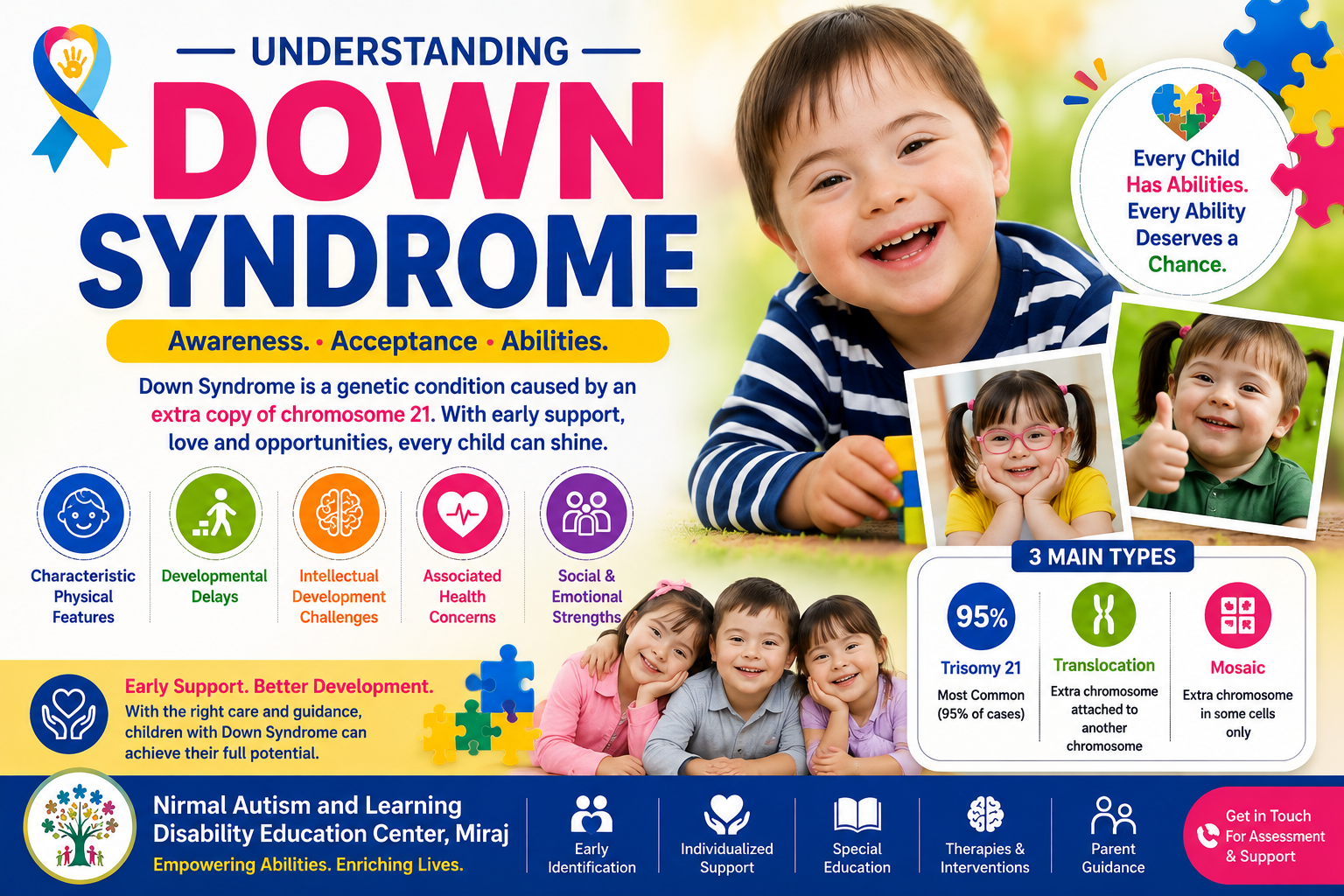
The uploaded educational material describes Down Syndrome as a genetic disorder involving an extra chromosome and highlights its effects on physical features, development, intellectual functioning, health and social-emotional characteristics.
Main Symptoms and Features of Down Syndrome
It can present differently in different children. Some commonly observed features described in the provided material include physical characteristics, developmental delays, intellectual developmental difficulties, health-related concerns and social-emotional features.
1. Physical Features of Down Syndrome
Children with this problem may have characteristic physical features such as:
- Flat facial profile
- Upward-slanting eyes
- Small and relatively flat nose
- Short neck
- Small ears
- Short and broad hands
- A single crease across the palm
- Low muscle tone
- Greater flexibility of the joints
- Small stature or slower physical growth
These physical characteristics are among the features highlighted in the provided image.
2. Developmental Delay
Children with this problem may achieve developmental milestones later than other children.
Developmental delays may involve:
- Sitting
- Crawling
- Walking
- Speech and language development
- Fine motor skills
- Hand-eye coordination
- Everyday self-care skills
For example, activities involving holding objects, using a pencil or manipulating small objects may take longer to develop.
Why Does Developmental Support Matter?
Developmental support can help children strengthen communication, motor, learning and adaptive skills according to their individual needs.
3. Intellectual Development
The provided material identifies intellectual developmental difficulties as one of the areas that may be associated with this.
Children may experience:
- Difficulty learning new concepts
- Need for additional repetition and practice
- Difficulty understanding complex instructions
- Slower acquisition of academic skills
- Need for individualized educational support
- Difficulty with certain problem-solving tasks
However, every child is different, and abilities can vary considerably.
Health Concerns Associated With Down Syndrome
Some children with this problem may have associated medical or health concerns.
The provided material highlights:
1. Congenital Heart Problems
Some children may have congenital heart defects and may require appropriate medical evaluation and follow-up.
2. Hearing and ENT Problems
The material also mentions:
- Ear infections
- Hearing-related difficulties
- ENT problems
Hearing difficulties can affect speech, language and learning, making appropriate assessment important.
3. Respiratory Problems
The provided material identifies respiratory infections as another possible health concern.
4. Thyroid-Related Problems
Thyroid problems are also mentioned in the educational material.
Importance of Medical Follow-Up
Children with thisproblem may benefit from regular medical monitoring based on their individual health needs.
1. Social and Emotional Features of Down Syndrome
This Problem is not limited to physical or developmental characteristics. Children may also have individual social and emotional strengths and challenges.
The provided material highlights:
2. Enjoyment of Social Interaction
Children may enjoy interacting with others and participating in social activities.
3. Interest in Interacting With Others
Some children may show a strong desire to communicate and engage with people around them.
4. Need for Guidance and Support
With appropriate guidance and educational support, children can develop their communication, learning and everyday skills.
Types of Down Syndrome
The provided material identifies three major types of Down Syndrome.
1. Trisomy 21
It is described as the most common type and accounts for approximately 95% of cases in the provided educational material.
It occurs when there is an additional copy of chromosome 21.
2. Translocation Down Syndrome
In Translocation Down Syndrome, additional chromosome 21 material becomes attached to another chromosome.
This type is less common than Trisomy 21.
3. Mosaic Down Syndrome
In Mosaic Down Syndrome, only some cells have an additional copy of chromosome 21 while other cells have the usual chromosome pattern.
The characteristics and developmental profile can vary between individuals.
Down Syndrome and Child Development
Children with this problem may require support in several areas of development.
Communication and Speech Development
Support may focus on:
- Understanding instructions
- Expressing needs
- Vocabulary development
- Speech development
- Social communication
1. Fine Motor Skills
Activities can help children develop:
- Pencil control
- Grasping
- Hand coordination
- Drawing
- Writing
- Manipulating objects
2. Gross Motor Skills
Developmental support may also focus on:
- Sitting
- Standing
- Walking
- Balance
- Coordination
- Physical strength
3. Learning Skills
Children may benefit from individualized learning approaches that consider their developmental level, strengths and areas requiring additional support.
Educational and Developmental Support for Children With Down Syndrome
Every child with this problem has individual strengths and needs. A structured developmental and educational approach can help children make progress in areas such as:
- Communication
- Cognitive development
- Motor skills
- Academic readiness
- Social interaction
- Self-care
- Functional independence
Early identification of developmental needs allows parents and professionals to plan appropriate support.
When Should Parents Seek Professional Evaluation?
Parents should consider professional developmental evaluation if they notice:
- Delayed developmental milestones
- Speech or language delay
- Difficulty with learning
- Fine or gross motor difficulties
- Difficulty with everyday activities
- Hearing concerns
- Behavioural or social difficulties
- Concerns about overall development
A professional evaluation can help understand the child’s individual developmental profile and identify areas where additional support may be useful.
Down Syndrome: Every Child Has Individual Strengths
This does not define a child’s entire potential.
Children may have different strengths in:
- Social interaction
- Communication
- Practical learning
- Visual learning
- Music and activities
- Everyday functional skills
With appropriate education, developmental support, family involvement and regular health care, children can continue developing their abilities and independence.
Frequently Asked Questions About Down Syndrome
1. What is Down Syndrome?
This is a genetic condition associated with an additional copy of chromosome 21.
2. What are the common features of Down Syndrome?
Commonly described features include characteristic facial features, low muscle tone, developmental delay and intellectual developmental difficulties. Some children may also have associated health concerns.
3. What are the three types of Down Syndrome?
The three types described in the provided material are:
- Trisomy 21
- Translocation Down Syndrome
- Mosaic Down Syndrome
4. Can children with Down Syndrome learn?
Yes. Children with Down Syndrome can learn and develop skills, although the pace and type of support required can vary from child to child.
5. Does Down Syndrome cause developmental delay?
Developmental delay is commonly associated with Down Syndrome. Delays may occur in areas such as motor development, speech and language and learning.
6. Can Down Syndrome be associated with health problems?
Yes. The provided material identifies concerns involving the heart, hearing/ENT, respiratory system and thyroid among the health issues that may occur.
7. Is early intervention important for children with Down Syndrome?
Early developmental and educational support can help identify a child’s needs and provide targeted assistance in communication, learning, motor and functional skills.
Support at Nirmal Autism and Learning Disability Education Center