Learn about ADHD symptoms, causes, diagnosis, assessment, prevalence and treatment options in children and adults, including behavioural and psychological approaches.
ADHD (Attention Deficit Hyperactivity Disorder)
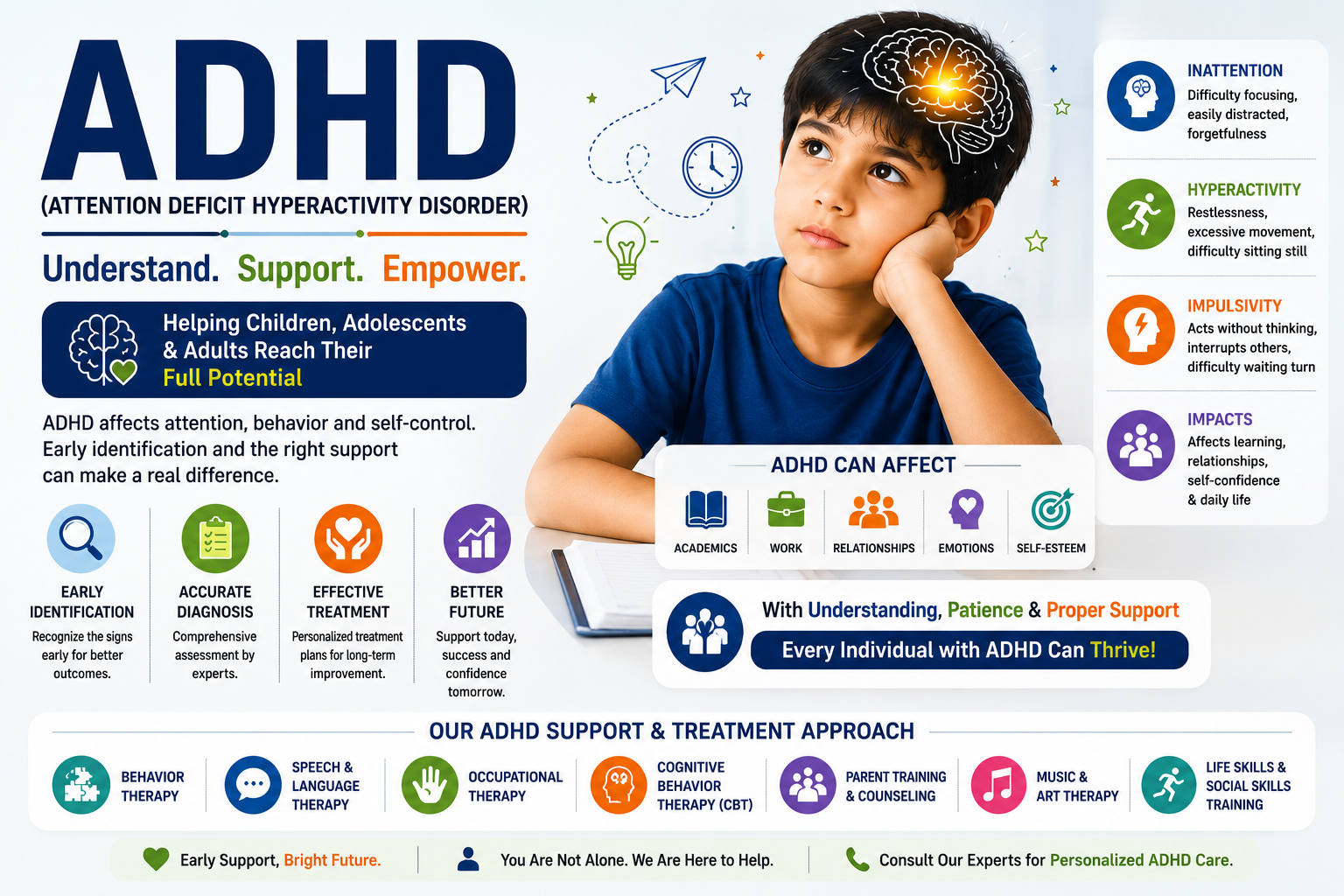
Attention Deficit Hyperactivity Disorder (ADHD) is a common neurodevelopmental disorder that can affect attention, activity levels, impulse control, emotional regulation, learning, relationships and daily functioning.
ADHD is usually identified during childhood, but symptoms can continue into adolescence and adulthood. The condition can affect different areas of life, including education, employment, relationships and social functioning.
-
What Is ADHD?
ADHD is characterized by persistent difficulties related to inattention, hyperactivity and impulsivity.
However, simply being active, distracted or impulsive does not necessarily mean that a person has ADHD. Diagnosis requires consideration of the frequency, intensity, severity, duration, pattern of symptoms and their impact on daily functioning.
1. Attention Deficit Hyperactivity Disorder in Children
Children with ADHD may experience difficulties with:
- Paying attention
- Completing schoolwork and other tasks
- Following instructions
- Organizing activities
- Controlling impulsive behaviour
- Remaining seated when expected
- Managing excessive activity
- Emotional regulation
- Social interactions
ADHD can affect academic achievement, peer relationships, family life and overall development.
2. Attention Deficit Hyperactivity Disorder in Adults
ADHD does not necessarily disappear with childhood. Symptoms may continue into adulthood, although their presentation can change over time.
Common Adult ADHD Symptoms
Adults with ADHD may experience:
- Difficulty paying attention to details
- Difficulty starting or completing tasks
- Poor time management
- Organizational difficulties
- Forgetfulness
- Difficulty regulating attention
- Restlessness and fidgeting
- Frequently interrupting others
- Excessive talking
- Difficulty waiting for their turn
- Emotional dysregulation
- Low frustration tolerance
Adult ADHD may remain undiagnosed because individuals can develop coping strategies that hide or compensate for their symptoms. Comorbid conditions can also make diagnosis more challenging.
ADHD Symptoms –
1. Inattention Symptoms
The nine symptoms described in the supplied material include:
- Difficulty paying close attention to details or making careless mistakes.
- Difficulty sustaining attention.
- Appearing not to listen when spoken to.
- Difficulty following instructions and completing tasks.
- Difficulty organizing tasks and activities.
- Avoiding tasks requiring sustained mental effort.
- Frequently losing things needed for activities.
- Being easily distracted.
- Being forgetful in daily activities.
2. Hyperactivity and Impulsivity Symptoms
These may include:
- Fidgeting or tapping hands and feet.
- Leaving the seat when expected to remain seated.
- Running or climbing in inappropriate situations.
- Difficulty engaging quietly in leisure activities.
- Feeling constantly “on the go.”
- Talking excessively.
- Answering before a question has been completed.
- Difficulty waiting for one’s turn.
- Interrupting or intruding on others.
Types of ADHD –
1. Predominantly Inattentive Presentation
The person mainly experiences problems with attention, concentration, organization, completing tasks and distractibility.
2. Predominantly Hyperactive-Impulsive Presentation
The person mainly experiences restlessness, excessive activity, impulsivity, fidgeting and difficulty waiting or remaining seated.
3. Combined Presentation
Both inattentive and hyperactive-impulsive symptoms are present.
The supplied material also describes ADHD severity as mild, moderate or severe.
ADHD Diagnosis –
How Is Attention Deficit Hyperactivity Disorder Diagnosed?
ADHD diagnosis requires a comprehensive clinical assessment.
According to the supplied material, important diagnostic considerations include:
- Symptoms persisting for at least 6 months
- Symptoms being present before 12 years of age
- Symptoms occurring in two or more settings
- Symptoms negatively affecting academic, social or occupational functioning
For individuals below 17 years, the material states that at least six symptoms are required, while individuals aged 17 years and above require at least five symptoms.
ADHD Assessment –
1. Clinical Assessment
Assessment may include:
- Detailed history taking
- Family history
- Medical history
- Personal history
- Academic history
- Occupational history
- Treatment history
- Substance-use history
- Temperamental history
- Clinical examination
- Mental status examination
- Observation
- Parent and family interviews
- Teacher reports
For children, information from parents, teachers and other relevant individuals can help clinicians understand symptoms across different settings.
2. ADHD Rating Scales
The supplied material lists several assessment tools, including:
- Conners Adult ADHD Rating Scale (CAARS)
- Adult ADHD Self-Report Scale (ASRS)
- Brown Attention-Deficit Disorder Scale (BADDS)
- Adult ADHD Clinical Diagnostic Scale (ACDS)
- ADHD Rating Scale
- ADHD Impact Module for Adults
- Wender-Reimherr Adult Attention Deficit Disorder Scale
- Vanderbilt ADHD Diagnostic Teacher & Parent Rating Scale
- Conners Parent and Teacher Rating Scales
3. Important Point About ADHD Testing
Attention Deficit Hyperactivity Disorder should not be diagnosed using a rating scale alone.
The supplied material states that diagnosis requires a multi-pronged approach involving history taking, clinical examination, information from parents and teachers, mental status examination and observation where appropriate.
ADHD Prevalence –
1. Attention Deficit Hyperactivity Disorder in Children and Adolescents
The supplied material reports that ADHD affects approximately 5–7% of children and adolescents based on pooled estimates.
It also reports the following regional meta-analysis estimates:
- India: 7.1%
- China: 6.3%
- Africa: 7.4%
2. Adult Attention Deficit Hyperactivity Disorder Prevalence
Based on pooled estimates from 20 studies described in the source material, adult ADHD affects approximately 2–2.5% of adults worldwide.
Causes of ADHD –
What Causes ADHD?
The exact cause of ADHD is not described as a single factor. The supplied material discusses a combination of genetic, neurobiological and environmental factors.
These include:
- Genetic factors
- Neurohormonal mechanisms
- Neuro-circuit dysfunction
- Cognitive dysfunction
- Environmental factors
- Family-related factors
1. Genetic Factors
The supplied material identifies genetics as an important factor in ADHD and describes a significant familial component. It also discusses twin-study findings and genetic loading within families.
2. Environmental and Organic Factors
Factors discussed in the source include:
- Environmental exposure such as lead
- Alcohol, cocaine and tobacco exposure during pregnancy
- Brain injury or birth asphyxia
- Premature delivery
- Low birth weight
- Encephalitis or meningitis sequelae
- Seizures
- Certain drug exposures
These factors require appropriate clinical evaluation and should not be assumed to be the cause of ADHD in an individual.
Neurobiology of ADHD
-
Brain Areas Associated With Attention Deficit Hyperactivity Disorder
The supplied material discusses several brain regions and neural circuits, including:
- Prefrontal cortex
- Frontal cortex
- Parietal cortex
- Basal ganglia
- Thalamus
- Cerebellum
- Accumbens nucleus
- Striatal regions
Imaging research described in the source has reported structural and functional differences in certain brain regions and networks associated with ADHD.
-
Attention Deficit Hyperactivity Disorder and Comorbid Conditions
ADHD can occur together with other developmental, behavioural and psychiatric conditions.
- Common Comorbidities
The supplied material discusses associations with:
- Autism spectrum disorder
- Learning disorders
- Tic disorders
- Depressive disorders
- Bipolar disorder
- Anxiety disorders
- Conduct disorder
- Oppositional defiant disorder
- Substance-use disorders
The source emphasizes that comorbidity is common in Attention Deficit Hyperactivity Disorder, with many individuals having an additional diagnosis.
Impact of ADHD –
1. Academic Impact
Attention Deficit Hyperactivity Disorder can affect:
- Learning ability
- Academic achievement
- School performance
- Task completion
- School attendance and continuation
2. Occupational Impact
Adults may experience:
- Difficulty obtaining employment
- Difficulty maintaining employment
- Underemployment
- Work-related problems
- Difficulty reaching their potential
3. Social and Relationship Impact
Attention Deficit Hyperactivity Disorder – related difficulties can contribute to:
- Relationship problems
- Poor listening
- Low frustration tolerance
- Impulsivity
- Social difficulties
- Family conflicts
4. Other Potential Impacts
The supplied material discusses associations between Attention Deficit Hyperactivity Disorder and:
- Substance use
- Road traffic accidents
- Risk-taking
- Early pregnancy
- Sexually transmitted diseases
- Conflict with law
- Social and family difficulties
ADHD Treatment –
Attention Deficit Hyperactivity Disorder treatment can involve a multimodal and multidisciplinary approach.
The supplied material discusses:
- Medication
- Behavioural interventions
- Psychotherapy
- Parent intervention
- Cognitive Behavioural Therapy (CBT)
- Coaching
- School-based interventions
- Peer-based interventions
- Digital health interventions
- Physical activity and supportive approaches
Treatment should be individualized according to age, symptoms, severity, comorbidities and individual needs.
1. ADHD Medication
The source discusses both stimulant and non-stimulant medication options.
2. Stimulant Medications
Examples listed in the supplied material include:
- Methylphenidate
- Dexmethylphenidate
- Amphetamine
- Lisdexamfetamine
3. Non-Stimulant Medications
Examples include:
- Atomoxetine
- Guanfacine
- Clonidine
Medication selection and dosage should always be determined by a qualified medical professional.
Psychological and Behavioural Treatment for Attention Deficit Hyperactivity Disorder –
1. Cognitive Behavioural Therapy
CBT is discussed as part of a multimodal approach for Attention Deficit Hyperactivity Disorder, particularly in adults.
The supplied material summarizes research showing potential benefits of CBT and other psychological interventions.
2. Parent Training
Parent training can help families understand Attention Deficit Hyperactivity Disorder and develop appropriate strategies for:
- Behaviour management
- Organization
- Routines
- Communication
- Supporting school activities
- Managing behavioural difficulties
3. School-Based Interventions
School-based approaches may include:
- Behavioural classroom interventions
- Teacher involvement
- Planning and organizational training
- Academic support
- Social skills support
4. Coaching and Mentoring
Attention Deficit Hyperactivity Disorder coaching may focus on practical skills such as:
- Time management
- Planning
- Organization
- Problem solving
- Emotional regulation
- Goal setting
- Managing attention and impulsivity
5. Digital Health Interventions for Attention Deficit Hyperactivity Disorder
The supplied material also discusses digital health interventions, including smartphone applications, wearable technologies and game-based digital therapeutic approaches.
The source mentions EndeavorRx, an FDA-approved game-based digital therapeutic device for children aged 8–12 years, while also noting the need for further research and that its approval described in the source is limited to that age group.
6. Supportive Approaches for Attention Deficit Hyperactivity Disorder
The supplied material discusses several additional approaches that have been studied, including:
- Yoga
- Mindfulness
- Tai Chi
- Exercise
- Sports and games
- TMS
- tDCS
- Hypnotherapy
The evidence differs between these approaches, and the source notes that further rigorous research is required for some interventions.
Attention Deficit Hyperactivity Disorder Course and Long-Term Outcome –
Attention Deficit Hyperactivity Disorder may persist from childhood into adolescence and adulthood.
The supplied material reports varying persistence and remission rates across follow-up studies. It also discusses how maturation and compensatory brain mechanisms may influence the way symptoms change over time.
Know About Occupational Therapy click here
Attention Deficit Hyperactivity Disorder Across Different Stages of Life –
1. Childhood
Symptoms may affect:
- School performance
- Learning
- Behaviour
- Peer relationships
- Family functioning
2. Adolescence
Difficulties may include:
- Academic problems
- Impulsivity
- Social difficulties
- Risk-taking behaviour
- Emotional difficulties
3. Adulthood
Possible difficulties include:
- Employment
- Organization
- Time management
- Relationships
- Attention
- Emotional regulation
4. Untreated Attention Deficit Hyperactivity Disorder and Its Impact
The supplied material associates untreated ADHD with potential difficulties involving:
- Quality of life
- Relationships
- Employment
- Substance use
- Depression
- Anxiety
- Driving safety
- Legal difficulties
Early identification and appropriate treatment are emphasized in the source material.
When Should You Seek an Attention Deficit Hyperactivity Disorder Assessment?
Professional assessment may be appropriate when persistent difficulties with attention, impulsivity, hyperactivity, organization, academic performance, employment or relationships are significantly affecting everyday life.
A qualified mental-health professional can assess symptoms, consider other possible explanations and evaluate associated conditions.
FAQs –
Conclusion –
Attention Deficit Hyperactivity Disorder is a neurodevelopmental disorder that can affect children, adolescents and adults. Its symptoms can influence attention, behaviour, learning, relationships, employment and everyday functioning.
Because Attention Deficit Hyperactivity Disorder can present differently at different ages and may occur alongside other conditions, comprehensive professional assessment is important. Treatment can be tailored according to the individual’s symptoms, age, severity, associated conditions and functional needs.
Early identification and appropriate intervention can support better academic, social and functional outcomes.
👉 ADHD बद्दल अधिक जाणून घेण्यासाठी हा YouTube Video नक्की पाहा … Click Here