Learn about Cerebral Palsy symptoms, types, causes and treatment options. Get individualized therapy, physiotherapy, occupational and developmental support in Miraj.
Cerebral Palsy – Symptoms, Types, Causes & Treatment
Cerebral Palsy (CP) is a group of lifelong neurological conditions that primarily affect movement, coordination, muscle tone and posture. It occurs because of abnormal development of the brain or damage to the developing brain, usually before, during or shortly after birth. The condition affects every child differently, and the severity of symptoms can range from mild movement difficulties to significant physical disability.
Children with Cerebral Palsy may also experience difficulties related to speech and communication, swallowing, vision, hearing, learning or development. Early assessment and individualized intervention can help children develop functional abilities and achieve greater independence.
What is Cerebral Palsy?
Cerebral Palsy in Children is a neurological condition that affects the way the brain controls movement and coordination. It is not contagious, and the original brain injury or developmental problem does not progressively worsen, although physical challenges associated with CP can change as a child grows.
The symptoms and abilities of children with Cerebral Palsy can vary significantly. Some children may walk independently, while others may require mobility aids or additional support.
Symptoms of Cerebral Palsy
The symptoms of this can become noticeable during early childhood. Common signs include delayed developmental milestones, abnormal muscle tone, difficulties with coordination and unusual movement patterns.
1. Movement and Coordination Problems
Children may experience:
- Delayed sitting, standing or walking
- Difficulty maintaining balance
- Poor coordination
- Difficulty controlling movements
- Unsteady walking
- Toe walking
- Difficulty performing precise movements
2. Muscle Stiffness or Tightness
Some children have increased muscle tone, which can cause:
- Stiff muscles
- Tightness in the arms or legs
- Restricted movement
- Difficulty walking
- Abnormal posture
3. Low Muscle Tone
Some children may have low muscle tone, which can make the body feel unusually floppy and may affect:
- Sitting posture
- Head control
- Balance
- Movement
- Overall body control
4. Involuntary Movements
Certain types of this can cause:
- Uncontrolled movements
- Jerky movements
- Tremors
- Difficulty controlling body movements
5. Developmental Delays
A child may take longer than expected to achieve developmental milestones such as:
- Holding the head up
- Sitting independently
- Crawling
- Standing
- Walking
- Using hands effectively
6. Speech and Communication Difficulties
Some children with Cerebral Palsy may experience:
- Delayed speech
- Difficulty pronouncing words
- Difficulty controlling speech muscles
- Communication difficulties
Speech and language therapy can help improve communication and, when necessary, support alternative methods of communication.
7. Vision, Hearing and Sensory Difficulties
Some children may experience:
- Squint or eye movement problems
- Vision difficulties
- Hearing difficulties
- Differences in responses to touch, sound or other sensory input
8. Associated Conditions
This can sometimes be associated with other difficulties, including:
- Epilepsy or seizures
- Learning difficulties
- Feeding and swallowing difficulties
- Drooling
- Vision problems
- Communication difficulties
Types of Cerebral Palsy
Cerebral Palsy in Children can be classified according to the main type of movement abnormality.
1. Spastic Cerebral Palsy
Spastic CP is characterized mainly by increased muscle tone and stiffness. This can make certain movements difficult and may affect walking, posture and coordination.
2. Dyskinetic Cerebral Palsy
Dyskinetic CP involves involuntary movements. Movements may be slow, uncontrolled, repetitive or unpredictable.
3. Ataxic Cerebral Palsy
Ataxic CP primarily affects balance, coordination and controlled movement.
4. Mixed Cerebral Palsy
Some children may have features of more than one type of Cerebral Palsy. This is known as mixed Cerebral Palsy.
Causes of Cerebral Palsy
Cerebral Palsy in Children can occur when the developing brain is affected during pregnancy, around the time of birth or shortly after birth. Possible causes include problems with brain development, bleeding in the brain, reduced oxygen or blood supply, certain infections and serious brain injuries. In many cases, however, the exact cause cannot be identified.
A child’s individual medical and developmental history is important when evaluating possible causes.
Diagnosis of Cerebral Palsy
There is no single test that can diagnose every case of this. Diagnosis generally involves assessing the child’s:
- Developmental milestones
- Muscle tone
- Movement patterns
- Posture
- Balance
- Coordination
- Reflexes
- Speech and communication
- Vision and hearing
- Overall development
Depending on the child’s needs, assessment may involve pediatric, neurological, developmental and therapy professionals.
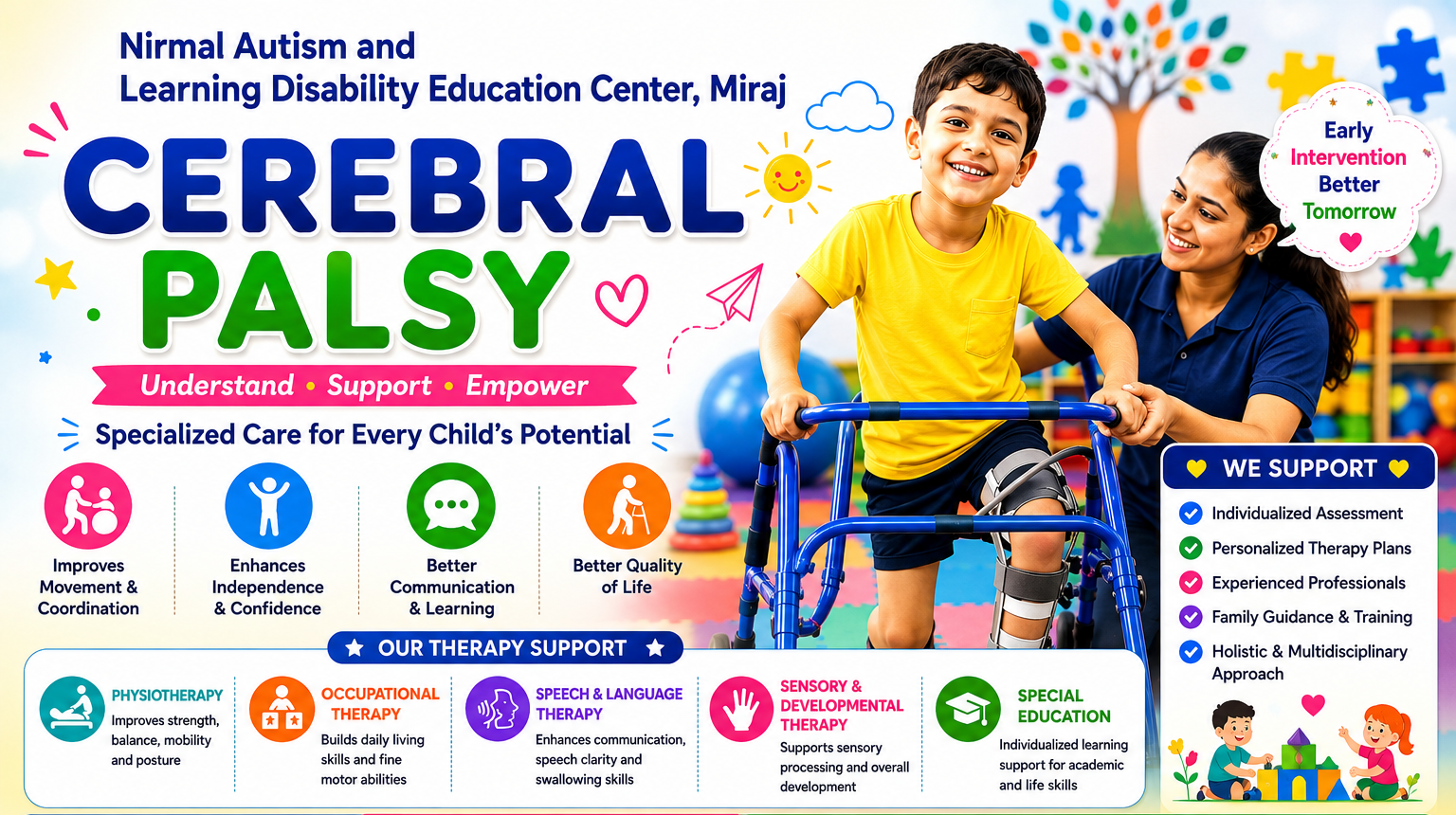
Cerebral Palsy Treatment and Therapy in Miraj
There is currently no cure that reverses Cerebral Palsy, but a range of treatments and therapies can help manage symptoms, improve functional abilities and support independence. Treatment should be individualized according to the child’s specific needs.
1. Physiotherapy for Cerebral Palsy
Physiotherapy is an important part of Cerebral Palsy management.
It may include:
- Stretching exercises
- Strengthening exercises
- Balance training
- Movement training
- Mobility exercises
- Gait training
- Posture management
- Range-of-motion exercises
Physiotherapy aims to maintain movement, improve strength and reduce problems associated with muscle shortening and restricted movement.
2. Occupational Therapy
Occupational Therapy helps children develop skills needed for everyday activities and greater independence.
Therapy may focus on:
- Fine motor skills
- Hand function
- Self-care skills
- Dressing
- Feeding
- Writing-related skills
- Daily living activities
- Use of adaptive equipment
Occupational therapists can identify difficulties with everyday tasks and recommend strategies or equipment to make these activities easier.
To learn more about Occupational Therapy Click here
3. Speech and Language Therapy
Speech and Language Therapy may be recommended for children who have difficulty with:
- Speech
- Language development
- Communication
- Oral motor skills
- Swallowing
Depending on the child’s needs, therapists may also introduce alternative communication methods or communication aids.
4. Sensory and Developmental Support
Some children with this problem may have difficulties with sensory processing, coordination, attention or developmental skills.
After assessment, appropriate developmental and sensory-based interventions can be incorporated into the child’s individualized therapy programme.
5. Special Education and Learning Support
Some children with this problem may require additional educational support because of physical, communication or learning difficulties.
Special education and remedial support can focus on:
- Learning skills
- Classroom participation
- Writing and fine motor skills
- Communication
- Academic support
- Individualized learning strategies
6. Medical Management
Depending on the child’s symptoms, medical treatment may be required for muscle stiffness, seizures, pain, sleep problems or other associated difficulties.
Treatment options can include medications, botulinum toxin injections for selected muscle groups, orthotic devices and, in some cases, surgery. These treatments should only be considered following assessment by appropriate medical specialists.
Why is Early Intervention Important?
Early identification of developmental and movement difficulties allows the child’s needs to be assessed and an appropriate intervention plan to be developed.
Early therapy may focus on improving or maintaining:
- Gross motor skills
- Fine motor skills
- Balance and coordination
- Communication
- Self-care abilities
- Functional independence
Regular reassessment is important because a child’s therapy and support needs can change as they grow.
Multidisciplinary Cerebral Palsy Care
This problem can affect several areas of a child’s development. Therefore, a multidisciplinary approach can be valuable.
Depending on the child’s needs, the care team may include:
1. Pediatrician / Child Specialist
Helps assess the child’s overall health and development.
2. Physiotherapist
Works on movement, strength, balance, posture and mobility.
3. Occupational Therapist
Supports fine motor skills, self-care and daily activities.
4. Speech and Language Therapist
Supports speech, communication and swallowing difficulties.
5. Special Educator
Provides individualized educational and learning support.
6. Psychologist / Developmental Specialist
May support developmental, behavioural and emotional needs.
A coordinated multidisciplinary approach allows different aspects of the child’s development to be addressed together.
Our Cerebral Palsy Services in Miraj
At Nirmal Autism and Learning Disability Education Center, Miraj, therapy and developmental support can be planned according to the individual needs of each child.
1. Our Support Services
- Developmental Assessment
- Physiotherapy Support
- Occupational Therapy
- Speech and Communication Support
- Sensory Support
- Remedial Therapy
- Special Education
- Individualized Therapy Planning
- Parent Guidance
Note: The specific therapy programme and frequency should be determined after an appropriate assessment of the child.
Role of Parents in Cerebral Palsy Therapy
Parents play an important role in supporting a child’s development.
Parents can help by:
- Following the home programme recommended by therapists
- Encouraging safe movement and independence
- Attending therapy sessions regularly
- Practising recommended activities at home
- Tracking developmental progress
- Communicating concerns to the therapy team
- Providing a supportive and safe environment
A consistent home-based programme, supported by therapists, can complement centre-based therapy.
Frequently Asked Questions About Cerebral Palsy
1. What is Cerebral Palsy?
Cerebral Palsy is a group of lifelong neurological conditions that mainly affect movement and coordination. It results from problems with brain development or damage to the developing brain.
2. Is Cerebral Palsy curable?
There is currently no cure that removes Cerebral Palsy, but treatment and rehabilitation can help manage symptoms and improve activity, participation and independence.
3. Can a child with Cerebral Palsy walk?
Yes, some children with Cerebral Palsy can walk independently. Others may need walking aids or mobility support. Walking ability varies depending on the type and severity of the condition.
4. Can physiotherapy help children with Cerebral Palsy?
Yes. Physiotherapy can help maintain and improve movement, strength, flexibility, balance and mobility, depending on the child’s individual condition.
5. Does Cerebral Palsy affect speech?
Some children with Cerebral Palsy experience speech or communication difficulties. Speech and Language Therapy can help address these difficulties and may provide alternative communication strategies when required.
6. Is Cerebral Palsy the same as Autism?
No. Cerebral Palsy and Autism are different neurodevelopmental conditions. However, a child can have Cerebral Palsy along with other developmental conditions, so appropriate assessment is important.
7. When should parents consult a specialist?
Parents should consider professional assessment if a child shows significant delays in developmental milestones, unusual muscle stiffness or floppiness, difficulties with movement or balance, abnormal walking patterns, speech difficulties, seizures, feeding problems or other developmental concerns.
When Should You Seek Professional Help?
Consult a qualified healthcare professional if your child has:
- Delayed developmental milestones
- Difficulty sitting, standing or walking
- Very stiff or unusually floppy muscles
- Poor balance or coordination
- Uncontrolled movements
- Toe walking
- Speech or communication difficulties
- Feeding or swallowing difficulties
- Seizures
- Vision or hearing concerns
These symptoms can have different causes, so they should not be used alone to diagnose Cerebral Palsy. A professional developmental assessment is important.