Learn about naturopathy, Panchakarma and supportive therapies for children with autism. Explore individualized developmental and therapeutic support at Nirmal Autism Center, Miraj.
Naturopathy for Autism & Supportive Therapies
Autism Spectrum Disorder (ASD) is a neurodevelopmental condition that can affect communication, social interaction, behaviour, sensory processing and daily living skills.
Every child with autism has different strengths, abilities and support needs. Therefore, an individualized approach based on the child’s developmental profile is important.
At Nirmal Autism and Learning Disability Education Center, Miraj, naturopathy and other complementary approaches may be considered as part of supportive care according to the child’s individual needs.
Important: Naturopathy or Panchakarma should not be presented as a cure for autism. Complementary approaches should be considered under appropriate professional guidance and should not replace evidence-based developmental, educational, behavioural or medical interventions.
Role of Naturopathy in Autism
Naturopathy follows a holistic approach that focuses on overall physical and mental well-being.
Depending on the child’s individual requirements, selected supportive approaches may help promote:
- Relaxation and well-being
- Physical activity
- Sensory experiences
- Healthy daily routines
- General comfort
- Mind-body relaxation
The suitability of any therapy should be evaluated according to the child’s age, developmental level, sensory needs and overall health.
Supportive Therapies for Children with Autism
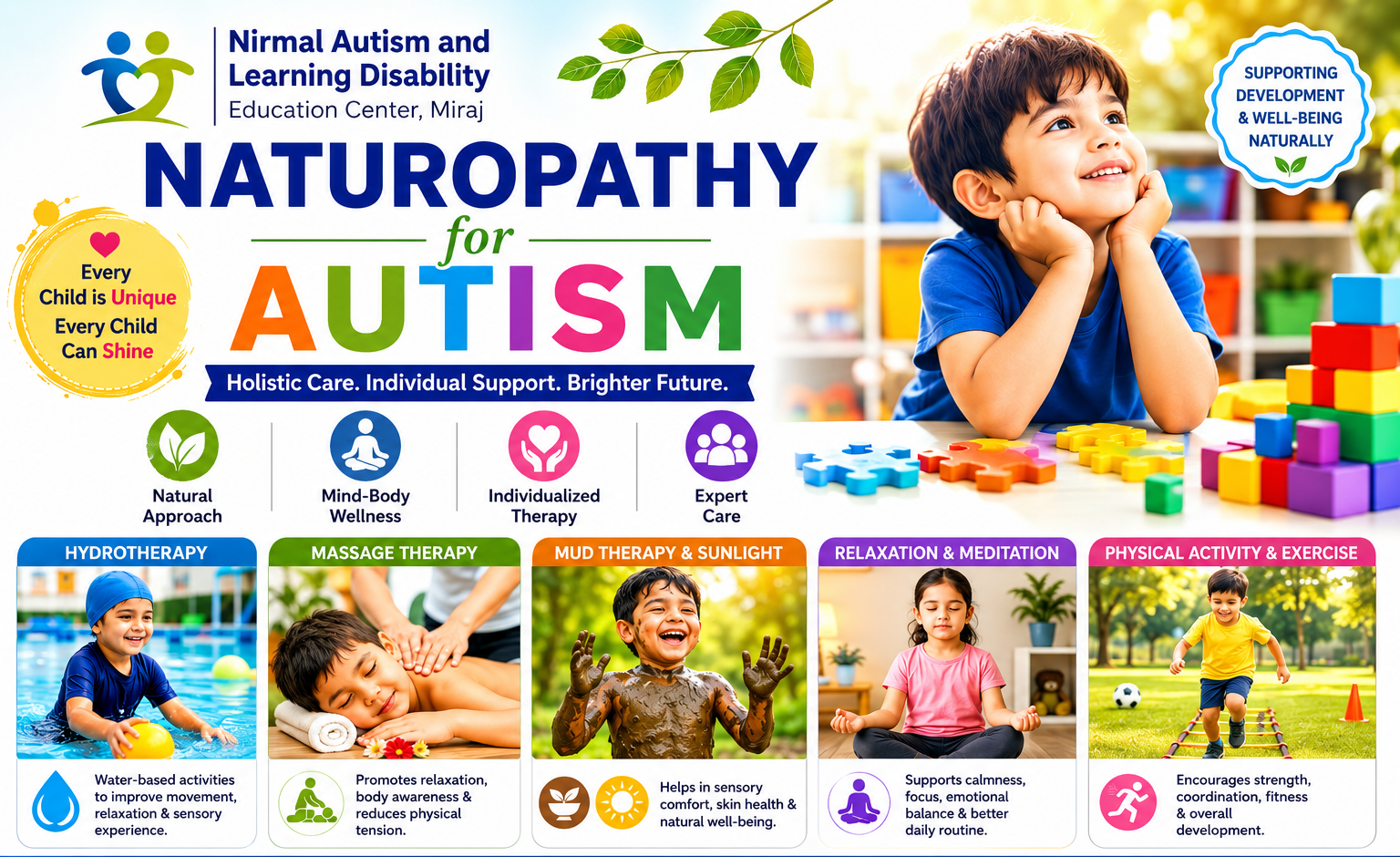
1. Hydrotherapy
Hydrotherapy uses water-based activities as a supportive approach for physical movement, relaxation and sensory experiences.
Under appropriate supervision, water-based activities may help encourage:
- Physical movement
- Relaxation
- Sensory engagement
- Participation in physical activity
- Enjoyment and confidence during activities
2. Massage Therapy
Massage therapy may be used as a supportive relaxation activity for some children.
Potential goals may include:
- Promoting relaxation
- Supporting body awareness
- Providing calming sensory input
- Developing a comfortable routine
Massage therapy should be individualized according to the child’s sensory preferences and tolerance.
3. Mud Therapy & Controlled Sunlight Exposure
Mud therapy and controlled exposure to natural sunlight may be included in some complementary wellness programs.
However, these approaches should be used carefully, considering:
- Age of the child
- Skin sensitivity
- Environmental conditions
- Duration of exposure
- Overall health condition
These approaches should be considered supportive wellness activities and not as a cure for autism.
Mind-Body Connection in Autism
Some children with autism may experience sensory sensitivities, anxiety, sleep difficulties or behavioural challenges.
Mind-body activities can be considered as part of a supportive care plan when appropriate for the child’s developmental level.
1. Meditation & Relaxation Activities
Simple relaxation, breathing or mindfulness-based activities may help some children develop a calming routine.
Activities should be adapted to the child’s:
- Age
- Attention span
- Communication abilities
- Sensory preferences
- Developmental level
2. Physical Activity & Exercise
Regular physical activity is important for children’s overall health and well-being.
Activities can be selected according to the child’s abilities and interests and may include:
- Movement activities
- Outdoor play
- Water-based activities
- Simple exercises
- Structured physical games
Role of Panchakarma in Autism
Panchakarma is a traditional Ayurvedic therapeutic approach.
In some settings, Panchakarma may be offered as a complementary or supportive therapy. However, it should not be promoted as a proven cure for Autism Spectrum Disorder.
If parents are considering Panchakarma or any other complementary therapy, they should discuss it with a qualified healthcare professional and consider the child’s overall medical and developmental needs.
Panchakarma should complement—not replace—appropriate developmental, educational, behavioural and medical care.
A Holistic Approach to Autism Management
Autism management may involve a multidisciplinary approach based on the child’s individual needs.
1. Behavioural & Developmental Support
Support may focus on:
- Behaviour development
- Social interaction
- Communication
- Functional skills
- Adaptive behaviour
2. Speech & Communication Support
Speech and communication interventions may focus on:
- Language development
- Functional communication
- Understanding instructions
- Expressing needs
- Social communication
3. Occupational & Sensory Support
Occupational and sensory-based interventions may help support:
- Sensory processing
- Fine motor skills
- Gross motor skills
- Daily living skills
- Functional independence
4. Special Education & Learning Support
Educational support may include:
- Individualized learning activities
- Special education
- Remedial education
- Academic skill development
- Functional learning
Individualized Treatment Plan for Every Child
There is no single treatment plan that works equally for every child with autism.
Before planning interventions, professionals may consider:
- Communication skills
- Social interaction
- Behaviour
- Sensory processing
- Speech and language
- Learning abilities
- Daily living skills
- Sleep patterns
- Emotional needs
- Family requirements
Based on the child’s assessment, an individualized developmental and therapeutic plan can be developed.
Nirmal Autism and Learning Disability Education Center
Nirmal Autism and Learning Disability Education Center, Miraj provides developmental, educational and therapeutic support for children with autism and learning difficulties.
The center focuses on understanding each child’s individual needs and providing structured support to promote development, learning, communication and functional skills.
A coordinated approach involving parents, therapists, educators and healthcare professionals can help provide consistent support for the child.
To know about us click here
What Should Parents Know About Autism Therapies?
Parents should remember that every child with autism is unique.
Before starting any therapy:
- Get an appropriate developmental assessment.
- Consult qualified professionals.
- Understand the purpose and expected outcomes of the therapy.
- Discuss complementary therapies with the child’s healthcare provider.
- Continue recommended evidence-based interventions.
- Do not stop prescribed treatment without professional advice.
- Be cautious about claims of a “100% cure” or “guaranteed recovery.”
The goal of therapy should be to support the child’s communication, learning, independence, social participation and overall quality of life.
Frequently Asked Questions About Naturopathy for Autism
1. Can naturopathy cure autism?
No. Autism is a neurodevelopmental condition, and naturopathy should not be promoted as a cure for autism. Supportive approaches may be considered according to the child’s individual needs.
2. Can Panchakarma be used for children with autism?
Panchakarma may be considered as a complementary approach in some settings, but it should only be considered after discussing the child’s individual medical and developmental needs with an appropriately qualified professional.
3. What therapies are commonly used to support children with autism?
Depending on individual needs, children may benefit from behavioural and developmental interventions, speech and language therapy, occupational therapy, sensory support, special education and social-skills interventions.
4. Is the same treatment suitable for every child with autism?
No. Autism is a spectrum, and children can have very different strengths, challenges and developmental needs. Individualized planning is therefore important.
5. Should parents consult a doctor before starting complementary therapy?
Yes. Parents should discuss any complementary or alternative therapy with the child’s healthcare professional to understand its potential benefits, risks and compatibility with existing treatments.
Conclusion
Autism support should focus on the individual needs, strengths and developmental goals of each child.
Early assessment, appropriate developmental interventions, education, behavioural support, communication therapy and individualized care can play an important role in supporting children with autism.
Naturopathy, Panchakarma and other complementary approaches may be considered as supportive care, where appropriate, but should not replace established developmental, educational, behavioural or medical interventions.
At Nirmal Autism and Learning Disability Education Center, Miraj, our focus is on providing structured, individualized and child-centered developmental support.
Book an assessment and understand the right therapy approach for your child click here