Sensory Integration Therapy for Children with Autism
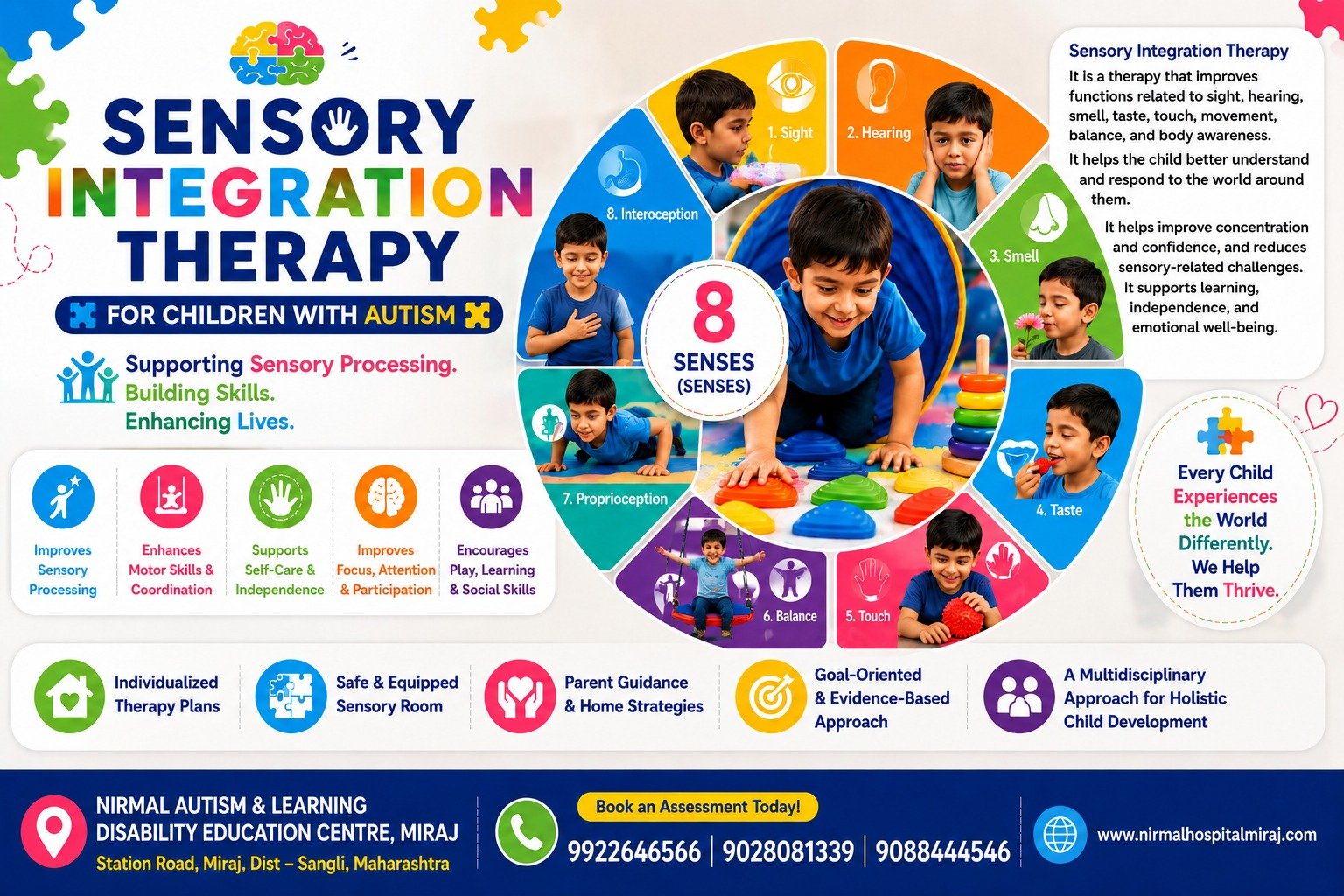
Sensory Integration Therapy is an individualized, activity-based approach commonly provided within occupational therapy to support children who experience difficulties related to processing and responding to sensory information.
Children receive sensory information through touch, movement, sound, sight, taste, smell and body-position systems. Some children with Autism Spectrum Disorder (ASD) may respond differently to sensory experiences, which can affect their participation in play, learning, self-care, communication and everyday routines.
Sensory-based occupational therapy may use carefully selected activities and therapeutic equipment to support functional participation and sensory modulation. The child’s goals should be individualized according to their developmental needs, strengths, preferences and everyday challenges.
What is Sensory Integration Therapy?
Sensory Integration Therapy is an approach based on the idea that children learn to process and respond to sensory information through interaction with their environment.
Occupational therapists may use activities involving:
- Touch
- Movement
- Balance
- Body awareness
- Visual input
- Auditory input
- Proprioceptive activities
- Vestibular activities
- Motor activities
- Play-based activities
The activities are selected according to the child’s individual sensory and functional needs.
The purpose is not simply to provide sensory stimulation, but to help the child participate more effectively in meaningful everyday activities.
Sensory Processing in Children with Autism
Children with autism may experience sensory differences in different ways.
A child may be:
1. Over-Responsive to Sensory Input
The child may find certain sensory experiences uncomfortable or overwhelming.
Examples may include:
- Loud sounds
- Bright lights
- Certain textures
- Hair cutting
- Tooth brushing
- Crowded places
- Certain clothing
- Specific food textures
- Unexpected touch
2. Under-Responsive to Sensory Input
Some children may appear less responsive to certain sensory information and may need more input to notice or respond to it.
3. Sensory-Seeking Behaviours
Some children may actively seek particular sensory experiences, such as:
- Spinning
- Jumping
- Rocking
- Running
- Touching objects
- Seeking deep pressure
- Repetitive movement
These behaviours should be understood in the context of the child’s overall development and functional needs rather than automatically labelled as a separate disorder. AAP advises that sensory symptoms should be evaluated as part of broader developmental and behavioural assessment.
How Can Sensory Integration Therapy Support Children with Autism?
When sensory differences interfere with everyday activities, occupational therapy may incorporate sensory-based activities to support functional goals.
1. Sensory Modulation
Therapy may help children develop strategies to participate in activities when sensory input is challenging.
Goals may include:
- Tolerating everyday sounds
- Participating in grooming
- Managing transitions
- Participating in classroom activities
- Tolerating different textures
- Engaging in play
- Participating in community activities
2. Body Awareness
Body awareness helps children understand where their body is and how it moves in relation to their environment.
Activities may include:
- Pushing
- Pulling
- Carrying
- Climbing
- Crawling
- Obstacle courses
- Heavy-work activities
- Movement games
These activities can be incorporated when appropriate to the child’s functional goals.
3. Balance and Movement
Vestibular activities involve movement and balance.
Therapy activities may include:
- Swings
- Balance activities
- Jumping
- Climbing
- Movement games
- Obstacle courses
- Controlled rocking
Activities should be selected and supervised by an appropriately trained professional.
4. Tactile Processing
Some children may have difficulty tolerating particular textures or types of touch.
Therapy may introduce appropriate tactile experiences through:
- Play materials
- Sand
- Water
- Clay
- Textured objects
- Art activities
- Fine-motor play
The child’s comfort and individual response should always be considered.
5. Auditory Sensory Support
Some children may be sensitive to sounds such as:
- Loud voices
- Traffic
- School bells
- Vacuum cleaners
- Crowded environments
- Sudden noises
Therapy and environmental strategies may help families identify practical ways to support the child’s participation in everyday environments.
6. Visual Sensory Support
Some children may find certain visual environments distracting or overwhelming.
Support may include:
- Reducing unnecessary visual distractions
- Using visual schedules
- Creating organized learning spaces
- Providing predictable visual information
- Using simple visual cues
Sensory Integration Activities for Children
Depending on the child’s assessment and goals, therapy sessions may include activities such as:
- Swing activities
- Balance exercises
- Obstacle courses
- Ball activities
- Climbing
- Crawling
- Jumping
- Trampoline activities
- Deep-pressure activities
- Fine-motor play
- Tactile play
- Sand and water play
- Push-and-pull activities
- Proprioceptive activities
- Movement-based games
Not every activity is appropriate for every child. The therapist should select activities based on the child’s individual needs and response.
Sensory Integration Therapy and Occupational Therapy
Sensory-based activities are often incorporated into Occupational Therapy (OT).
Occupational therapy focuses on helping children participate in meaningful daily activities, including:
- Self-care
- Feeding
- Dressing
- Hygiene
- Play
- Learning
- School activities
- Fine-motor tasks
- Daily routines
AAP describes clinical occupational therapy for children on the autism spectrum as supporting areas including self-care, executive functioning, handwriting, fine motor skills and sensory modulation.
Sensory Integration Therapy for Daily Activities
The goal of sensory support should be connected to real-life activities.
For example, therapy may focus on helping a child:
1. Participate in School
- Sit comfortably during activities
- Follow classroom routines
- Participate in group activities
- Manage classroom sensory distractions
2. Participate at Home
- Complete morning routines
- Get dressed
- Brush teeth
- Eat meals
- Participate in family activities
3. Participate in the Community
- Visit shops
- Travel
- Attend social activities
- Tolerate different environments
- Participate in outdoor activities
Sensory Integration Assessment
Before developing a sensory-based intervention plan, the occupational therapist may assess:
- Sensory responses
- Motor skills
- Fine motor abilities
- Gross motor skills
- Balance
- Coordination
- Body awareness
- Attention
- Self-care
- Play skills
- Functional participation
The therapist may also discuss with parents situations in which sensory differences affect the child’s everyday life.
AAP recommends that sensory-based interventions have specific goals and measurable outcomes, with progress reviewed to determine whether the intervention is helping the individual child.
Individualized Sensory Integration Therapy Program
Every child responds differently to sensory experiences.
Therefore, therapy should consider:
- Age
- Developmental level
- Autism-related needs
- Sensory preferences
- Communication abilities
- Motor skills
- Attention
- Learning environment
- Family priorities
- School requirements
- Everyday functional challenges
Individualized Goals May Include
- Improve participation in classroom activities
- Tolerate specific everyday sensory experiences
- Improve body awareness
- Develop motor coordination
- Participate in self-care
- Improve play participation
- Improve attention during meaningful activities
- Support transitions between activities
- Increase independence
Sensory Integration Therapy for Different Sensory Needs
1. Touch Sensitivity
For children who are sensitive to touch, activities may be introduced gradually and respectfully according to their tolerance.
2. Sound Sensitivity
Environmental modifications and practical coping strategies may be considered when sounds interfere with participation.
3. Movement Needs
Movement activities may be incorporated when they support the child’s functional goals.
4. Food Texture Sensitivity
Some children may experience difficulties with food textures. Feeding concerns should be assessed appropriately, and a multidisciplinary approach may be required when necessary.
5. Grooming and Hygiene Sensitivity
Therapy may support participation in activities such as:
- Hair cutting
- Nail trimming
- Tooth brushing
- Bathing
- Wearing clothes
Sensory Integration Therapy and Autism
Sensory differences are common in autism and can affect everyday participation.
However, sensory integration therapy should not be presented as a cure for autism.
Research on sensory-based interventions has shown some potential benefits in specific skill areas, but the overall evidence remains limited and inconsistent. AAP recommends that families and clinicians establish clear functional goals and monitor whether the intervention is producing meaningful benefits for the individual child.
Benefits of Sensory-Based Occupational Therapy
Depending on the child’s individual needs and goals, sensory-based occupational therapy may support:
- Sensory modulation
- Motor skills
- Body awareness
- Balance and coordination
- Fine motor development
- Participation in daily routines
- Self-care
- Play
- Classroom participation
- Attention during meaningful activities
- Tolerance of selected everyday sensory experiences
Outcomes vary from child to child, and progress should be assessed against individualized functional goals.
Parent Involvement in Sensory Therapy
Parents are important partners in helping children participate in everyday activities.
Parents may learn strategies to:
- Understand their child’s sensory preferences
- Modify the home environment
- Support daily routines
- Prepare children for transitions
- Provide appropriate movement opportunities
- Encourage participation
- Communicate observations to the therapist
Sensory Strategies at Home
Depending on professional recommendations, families may use simple strategies such as:
- Predictable routines
- Visual schedules
- Quiet spaces
- Movement breaks
- Structured play
- Appropriate calming activities
- Reduced environmental distractions
Home strategies should be individualized rather than applying the same sensory activities to every child.
Sensory Integration Therapy and Other Autism Therapies
Sensory-based occupational therapy can be part of a broader individualized support plan.
Depending on the child’s needs, the multidisciplinary program may include:
- ABA-based intervention –
To Know more about this click here
- Speech & Language Therapy
To Know more about this click here
Also Take a look on Speech & Language therapy related video click here
- Occupational Therapy
To Know more about this click here
- Remedial Therapy
To Know more about this click here
- Special Education
- Play Therapy
- Parent Training
- Psychological Support
Different interventions can address different developmental and functional goals.
Who May Benefit from Sensory Integration Therapy?
Sensory-based occupational therapy may be considered for children who have functional difficulties associated with sensory responses, including children with:
- Autism Spectrum Disorder
- Developmental differences
- Motor coordination difficulties
- Fine motor difficulties
- Self-care challenges
- Sensory sensitivities
- Difficulty participating in everyday routines
- Difficulty tolerating certain environments
A professional occupational therapy assessment can help determine whether sensory-based intervention is appropriate.
When Should Parents Consider a Sensory Assessment?
Parents may consider professional assessment if their child:
- Is extremely sensitive to certain sounds
- Avoids specific textures
- Has difficulty with grooming
- Finds crowded environments overwhelming
- Seeks constant movement
- Has difficulty sitting for meaningful activities
- Has difficulty with balance or coordination
- Avoids certain everyday activities
- Has difficulty participating in school routines
- Has difficulty with self-care because of sensory responses
A professional assessment can help identify functional challenges and appropriate support options.
Frequently Asked Questions About Sensory Integration Therapy
1. What is Sensory Integration Therapy?
Sensory Integration Therapy is an individualized approach, commonly incorporated into occupational therapy, that uses sensory and movement-based activities to address functional difficulties related to sensory processing.
2. Can Sensory Integration Therapy help children with Autism?
It may help some children with specific sensory or functional difficulties. However, evidence remains limited and outcomes vary, so therapy should be individualized and monitored.
3. Does Sensory Integration Therapy cure Autism?
No. Sensory Integration Therapy does not cure autism. It may be used as part of a broader individualized support plan.
4. What sensory activities are used in therapy?
Depending on the child’s needs, activities may include swings, balance activities, obstacle courses, tactile play, movement activities, ball activities and proprioceptive activities.
5. Is Sensory Integration Therapy part of Occupational Therapy?
Sensory-based approaches are commonly incorporated by occupational therapists as part of individualized occupational therapy programs.
6. Is Sensory Integration Therapy suitable for every child with Autism?
No. Children have different sensory profiles and functional needs. An occupational therapy assessment should guide whether and how sensory-based intervention is used.
7. How long does Sensory Integration Therapy take?
There is no standard duration for every child. Frequency and duration depend on the child’s goals, needs, response to intervention and progress.
8. Can parents use sensory activities at home?
Parents may be taught individualized strategies by the treating therapist. Home activities should be appropriate for the child and should support specific functional goals.
9. Is Sensory Integration Therapy scientifically proven?
Research has reported potential benefits in some areas, but the overall evidence base remains limited and inconsistent. Therefore, families should discuss goals, expected outcomes and progress monitoring with the treating professional.
Sensory Integration Therapy at Nirmal Autism & Learning Disability Education Centre, Miraj
At Nirmal Autism & Learning Disability Education Centre, Miraj, sensory-based occupational therapy programs are planned according to each child’s developmental, sensory and functional needs.
Therapy may focus on:
- Sensory Processing
- Sensory Modulation
- Fine Motor Skills
- Gross Motor Skills
- Balance
- Coordination
- Body Awareness
- Self-Care
- Play Skills
- Attention and Participation
- Daily Living Skills
Our approach focuses on individualized goals and meaningful functional participation rather than using the same sensory activities for every child.
Give Your Child the Right Sensory Support
Every child experiences the world differently.
If sensory differences are affecting your child’s learning, play, self-care, communication, behaviour or participation in everyday activities, an occupational therapy assessment can help identify appropriate support.
The aim is to help children participate more comfortably and independently in meaningful activities at home, school and in the community.