Explore Panchakarma treatment in Miraj, including Abhyanga, Shirodhara, Nasya, Basti and other Ayurvedic therapies with individualized care for children and families.
Panchakarma Treatment – Ayurvedic Therapy and Supportive Care
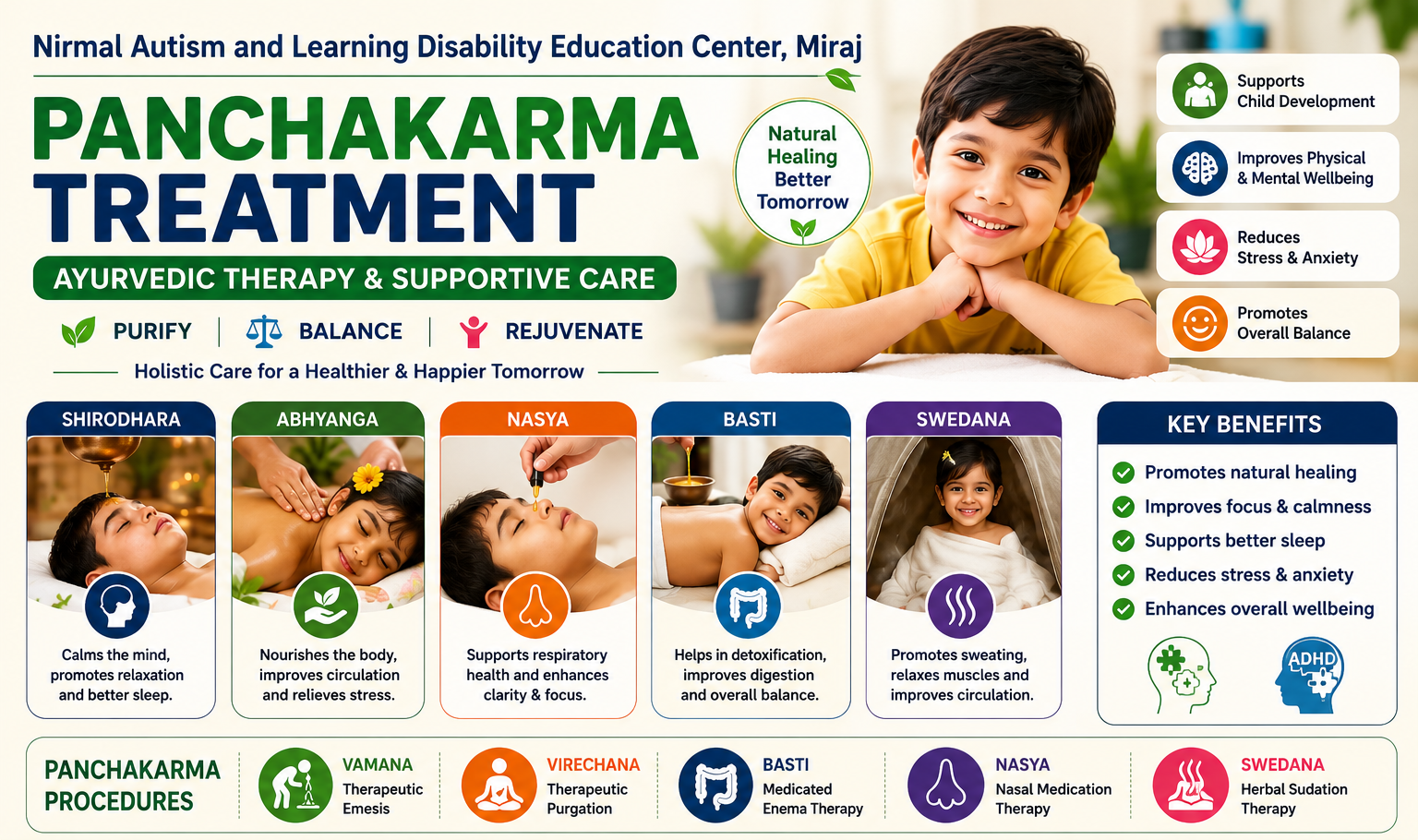
Panchakarma Treatment is a traditional Ayurvedic therapeutic approach involving a combination of preparatory, main and post-treatment procedures. It is traditionally used with the aim of supporting physiological balance and overall wellbeing. The Central Council for Research in Ayurvedic Sciences (CCRAS), Ministry of AYUSH, describes Panchakarma as including procedures such as Vamana, Virechana, Basti and Nasya, along with preparatory and post-procedure care.
At Nirmal Autism and Learning Disability Education Center, Miraj, Panchakarma-based Ayurvedic therapies may be considered as part of an individualized supportive wellness approach, depending on the person’s age, health condition and clinical assessment.
What is Panchakarma?
Panchakarma is a classical Ayurvedic therapeutic system traditionally involving procedures intended for Shodhana (purificatory therapy) and supportive care.
According to CCRAS, the traditional Panchakarma framework includes procedures such as:
- Vamana – therapeutic emesis
- Virechana – therapeutic purgation
- Basti – medicated enema procedures
- Nasya – administration of medicines through the nasal route
- Other procedures may be used depending on the Ayurvedic assessment and treatment plan.
Panchakarma treatment is not a single procedure. It generally involves appropriate preparatory procedures, the selected main procedure and post-treatment care.
Panchakarma for Children and Developmental Support
Children with developmental concerns may require individualized care based on their specific needs.
The posters provided for this page mention Panchakarma in relation to Autism Spectrum Disorder (ASD) and ADHD. For website communication, it is better to describe these therapies as supportive or complementary care, rather than claiming that Panchakarma cures Autism or ADHD.
Autism and ADHD are neurodevelopmental conditions that require appropriate developmental, behavioural, educational and therapeutic interventions. Panchakarma, where considered, should be planned only after appropriate assessment and under qualified professional supervision.
Panchakarma Therapies and Procedures
1. Abhyanga – Ayurvedic Oil Massage
Abhyanga is an Ayurvedic oil massage procedure involving the application of suitable oil with massage techniques.
It may be used as part of an Ayurvedic wellness or therapeutic programme to promote relaxation and support physical wellbeing.
The specific oil, duration and technique should be selected according to the individual’s condition and Ayurvedic assessment.
2. Shirodhara Therapy
Shirodhara involves the controlled pouring of a suitable liquid, traditionally medicated oil or another preparation, over the forehead in a specific manner.
CCRAS describes Shirodhara as an Ayurvedic procedure traditionally used in certain conditions including insomnia and some mental health-related conditions.
At our centre, Shirodhara may be considered as part of an individualized Ayurvedic wellness programme when clinically appropriate.
3. Nasya Therapy
Nasya is an Ayurvedic procedure in which an appropriate medicinal preparation is administered through the nasal route.
It is one of the procedures included within traditional Panchakarma practice.
Nasya should be performed only when appropriate and under the supervision of a qualified practitioner.
4. Basti Therapy
Basti involves the administration of an Ayurvedic medicinal preparation through the rectal route. Traditional Ayurvedic practice includes different types of Basti procedures, such as oil-based and decoction-based approaches.
Because Basti is a specialized procedure, appropriate assessment, indication, contraindication screening and professional supervision are essential.
5. Virechana Therapy
Virechana is a traditional Ayurvedic therapeutic purgation procedure.
It is considered one of the major Panchakarma procedures. Proper preparation and post-procedure dietary care may form part of the treatment process.
It should not be undertaken without assessment by a qualified Ayurvedic professional.
6. Vamana Therapy
Vamana is a traditional Ayurvedic therapeutic emesis procedure.
It is one of the major Panchakarma procedures described by CCRAS. Because it involves induced vomiting, careful patient selection, preparation and professional supervision are particularly important.
7. Swedana – Ayurvedic Sudation Therapy
Swedana is an Ayurvedic procedure intended to induce sweating, with or without the use of heat.
It may be used as a preparatory or supportive procedure in certain Ayurvedic treatment programmes.
Common Panchakarma-Based Therapies
Based on the information provided in your posters, the centre’s Ayurvedic therapy programme may include:
1. Abhyanga
Ayurvedic oil massage used as part of relaxation and supportive care.
2. Shirodhara
A controlled stream of suitable liquid applied over the forehead.
3. Nasya
Administration of an Ayurvedic preparation through the nasal route.
4. Basti
A specialized Ayurvedic medicated enema procedure.
5. Swedana
A traditional Ayurvedic sweating/sudation procedure.
6. Virechana
A traditional therapeutic purgation procedure.
7. Vamana
A traditional therapeutic emesis procedure.
The selection of any procedure should depend on the individual’s health status, age, symptoms, Ayurvedic assessment and suitability.
Panchakarma and Autism
The information in the supplied poster mentions Panchakarma as a supportive approach for children with Autism Spectrum Disorder (ASD).
For responsible medical communication, the website should avoid stating that Panchakarma treats or cures Autism.
Autism is a neurodevelopmental condition, and evidence-based developmental interventions such as behavioural therapy, speech and language therapy, occupational therapy, special education and parent-mediated support may form important parts of care.
If Ayurvedic therapy is considered by a family, it should be discussed with the child’s healthcare and therapy team and used as a complementary approach, not as a replacement for established developmental care.
Panchakarma and ADHD
The supplied material also mentions Panchakarma in relation to ADHD (Attention-Deficit/Hyperactivity Disorder).
Children with ADHD may require comprehensive assessment and individualized management that can include behavioural interventions, educational support, parent training and, where appropriate, medical treatment.
Ayurvedic therapies should be considered only as supportive care when clinically appropriate and should not replace recommended ADHD treatment.
Potential Supportive Benefits of Ayurvedic Therapies
Depending on the selected therapy and the individual, Ayurvedic procedures may be used with goals such as:
- Promoting relaxation
- Supporting general wellbeing
- Supporting physical comfort
- Encouraging a structured wellness routine
- Supporting sleep and relaxation
- Providing complementary care alongside other therapies
Important: Benefits vary between individuals, and Panchakarma should not be promoted as a guaranteed treatment or cure for Autism, ADHD or other medical conditions.
Panchakarma Treatment Process
A Panchakarma programme may involve different stages.
1. Initial Assessment
Before treatment, the individual’s health history, age, symptoms, current medications and overall suitability should be assessed.
2. Purva Karma – Preparatory Procedures
Traditional Panchakarma may involve preparatory procedures such as:
- Snehana – Oleation
- Swedana – Sudation
These may be used before selected main procedures.
3. Pradhana Karma – Main Procedure
Depending on the Ayurvedic treatment plan, the selected main procedure may include:
- Vamana
- Virechana
- Basti
- Nasya
The procedure should be selected according to the individual’s assessment.
4. Paschat Karma – Post-Treatment Care
Post-treatment care can include appropriate diet, rest and lifestyle guidance.
CCRAS describes Samsarjana Karma as a special post-Panchakarma dietary regimen and daily routine during the recovery period.
Other Supportive Therapies at Our Centre
As shown in the supplied material, the broader programme may also include complementary developmental and educational support.
1. Physiotherapy
Physiotherapy may focus on:
- Strength
- Mobility
- Balance
- Posture
- Coordination
- Functional movement
2. Special Education Support
Special education may support:
- Academic skills
- Reading
- Writing
- Learning skills
- Individualized educational goals
3. Speech and Communication Support
Speech and communication interventions may be considered for children who have difficulties with:
- Speech
- Language
- Communication
- Social interaction
4. Parent Guidance
Parents can receive guidance regarding:
- Home-based activities
- Daily routines
- Behaviour management
- Developmental support
- Therapy follow-up
Who Can Consider Panchakarma Therapy?
Panchakarma is not appropriate for everyone.
Suitability depends on factors such as:
- Age
- General health
- Current medical conditions
- Current medications
- Individual symptoms
- Ayurvedic assessment
- Specific Panchakarma procedure being considered
A qualified practitioner should determine whether a particular procedure is appropriate.
Safety and Precautions
Panchakarma procedures can involve significant physiological effects. Some procedures, such as Vamana, Virechana and Basti, require careful patient selection and professional supervision.
The current CCRAS Panchakarma technician curriculum specifically includes indications, contraindications, safety precautions and possible complications associated with major Panchakarma procedures.
Therefore:
- Do not perform Panchakarma procedures at home.
- Do not self-administer Ayurvedic medicines.
- Inform the practitioner about existing medical conditions.
- Inform the practitioner about all current medicines.
- Children should receive age-appropriate assessment before any procedure.
- Do not stop prescribed medical or psychiatric treatment without consulting the treating doctor.
Panchakarma for Children – A Child-Centred Approach
When considering Ayurvedic therapies for children, treatment should always be age-appropriate, individualized and supervised.
At Nirmal Autism and Learning Disability Education Center, the focus should remain on the child’s:
- Safety
- Comfort
- Developmental needs
- Communication
- Behaviour
- Learning
- Family involvement
- Overall wellbeing
Any Panchakarma procedure should be selected only after appropriate professional assessment.
Why Choose Individualized Panchakarma Care?
Every individual has different needs. A standardized Panchakarma programme may not be appropriate for everyone.
An individualized approach considers:
- Medical history
- Developmental profile
- Age
- Current symptoms
- Physical condition
- Ongoing treatments
- Family concerns
- Suitability of the selected Ayurvedic procedure
This helps ensure that therapy is planned responsibly and safely.
Kindly check this to look out Panchkarm Treatment facilities in our hospital click here
Frequently Asked Questions About Panchakarma
1. What is Panchakarma?
Panchakarma is a traditional Ayurvedic therapeutic approach involving selected purification and supportive procedures. The classical procedures include Vamana, Virechana, Basti and Nasya, along with preparatory and post-treatment care.
2. Is Panchakarma a treatment for Autism?
Panchakarma should not be presented as a cure for Autism. Autism is a neurodevelopmental condition requiring appropriate developmental and behavioural support. Ayurvedic therapies, if considered, should be complementary and individualized.
3. Is Panchakarma useful for ADHD?
Panchakarma should not replace established ADHD management. Any Ayurvedic therapy should be considered only after professional assessment and as a complementary approach where appropriate.
4. Is Panchakarma safe for children?
Not every Panchakarma procedure is suitable for every child. Children require careful assessment, age-appropriate treatment planning and qualified supervision.
5. What are the main Panchakarma procedures?
Traditional Panchakarma includes procedures such as Vamana, Virechana, Basti and Nasya. Specific practices and classifications can vary within Ayurvedic traditions.
6. What is Abhyanga?
Abhyanga is an Ayurvedic oil massage procedure and may be used as part of an Ayurvedic wellness or therapeutic programme.
7. What is Shirodhara?
Shirodhara is an Ayurvedic procedure in which a suitable liquid, traditionally medicated oil or another preparation, is poured in a controlled stream over the forehead.
8. Can Panchakarma replace regular medical treatment?
No. Panchakarma should not replace prescribed medical, psychiatric, developmental, behavioural or educational treatment.
Our Panchakarma Services in Miraj
At Nirmal Autism and Learning Disability Education Center, Miraj, Panchakarma and Ayurvedic supportive therapies can be considered as part of an individualized care approach.
Our Ayurvedic Support May Include:
- Abhyanga
- Shirodhara
- Nasya
- Basti
- Virechana
- Vamana
- Swedana
- Other supportive Ayurvedic procedures as clinically appropriate
Treatment selection should be based on professional assessment and individual suitability.
If you are looking for Panchakarma treatment in Miraj or want to understand whether Ayurvedic supportive therapy may be appropriate for your child, consult a qualified professional before starting treatment.