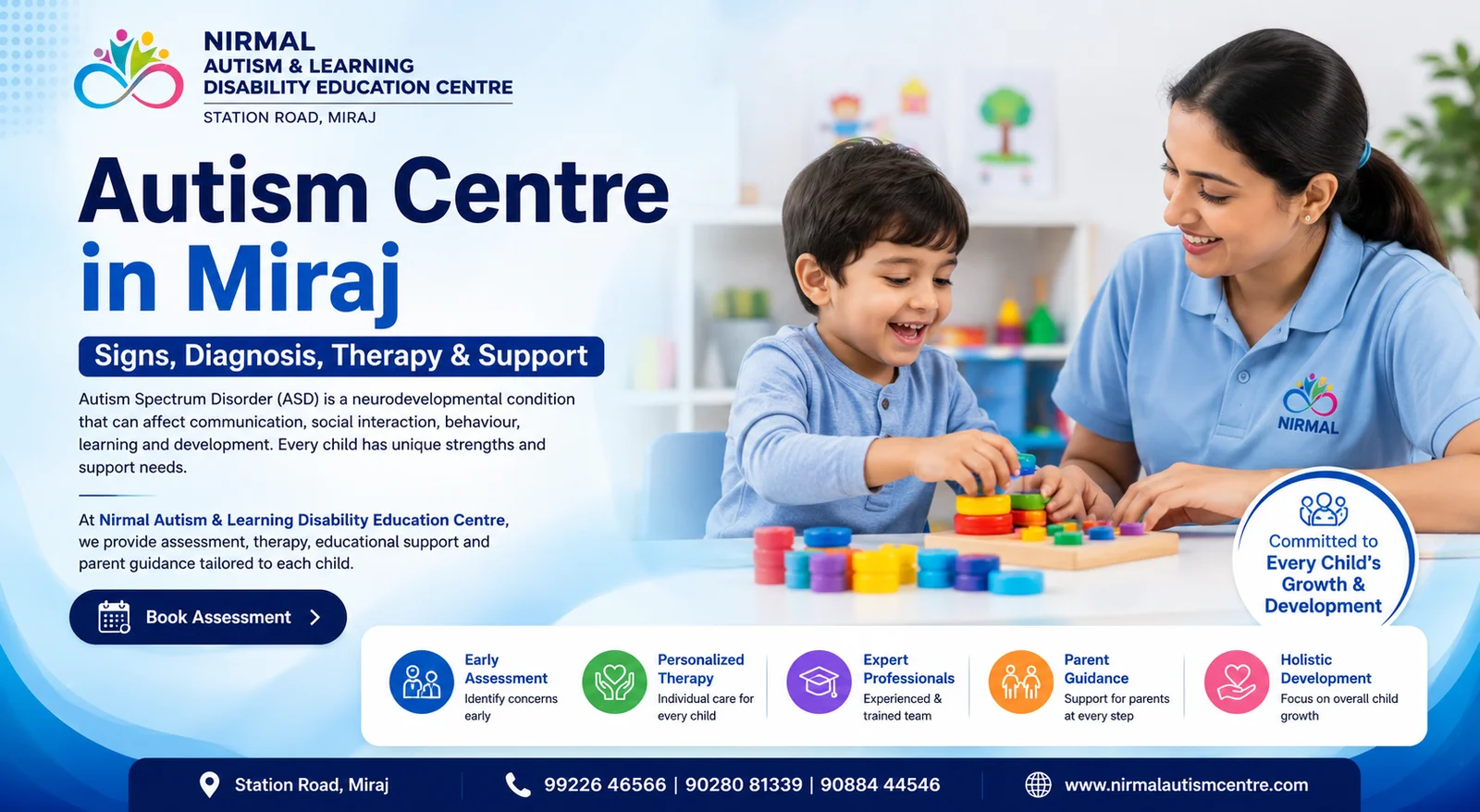
Autism Centre in Miraj – Signs, Diagnosis, Therapy & Support
Autism Spectrum Disorder (ASD) is a neurodevelopmental condition that can affect communication, social interaction, behaviour, learning and development. Autism is called a spectrum because every child may experience different strengths, challenges and support needs.
At Nirmal Autism & Learning Disability Education Centre, Station Road, Miraj, children and families can receive assessment, educational support, therapy and guidance based on the child’s individual developmental needs.
What is Autism?
Understanding Autism Spectrum Disorder
Autism Spectrum Disorder is a neurodevelopmental condition associated with differences in social communication and interaction, along with restricted or repetitive patterns of behaviour, interests or activities.
The presentation of autism can vary significantly from one child to another. Some children may have communication difficulties, while others may experience greater challenges with social interaction, flexibility, sensory processing or learning.
Why is Autism Called a Spectrum?
Autism is called a spectrum because children can have different combinations and levels of strengths and difficulties.
One child may have delayed speech, while another may speak fluently but experience difficulties with social communication. Some children may also have sensory, behavioural or learning difficulties.
Autism and Child Development
Developmental milestones such as communication, social interaction, play, learning and adaptive skills can provide important information about a child’s development.
Parents who notice developmental concerns should discuss them with an appropriately qualified professional.
Signs & Symptoms of Autism
Early Signs of Autism in Children
Possible early signs may include:
- Delayed speech or language development
- Limited response when the child’s name is called
- Reduced or unusual eye contact
- Limited use of gestures
- Difficulty communicating needs
- Difficulty interacting with other children
- Repetitive play or movements
- Strong preference for routines
- Difficulty with changes
- Unusual sensory responses
Communication and Language Difficulties
Some children may experience:
- Speech delay
- Difficulty expressing their needs
- Difficulty understanding language
- Repetition of words or phrases
- Difficulty using language socially
- Limited gestures or pointing
Social Interaction Difficulties
Children may experience difficulty with:
- Social interaction
- Shared play
- Understanding social cues
- Developing age-appropriate relationships
- Sharing interests with others
Repetitive Behaviours and Restricted Interests
Possible behaviours include:
- Repetitive movements
- Repetitive play
- Strong attachment to particular objects
- Highly focused interests
- Preference for predictable routines
- Distress when routines change
Sensory Processing Differences
Some children may be unusually sensitive or less sensitive to:
- Sounds
- Touch
- Light
- Smells
- Taste
- Movement
Sensory differences can affect a child’s comfort, behaviour, eating habits, learning and participation in everyday activities.
When Should Parents Seek Professional Advice?
Parents should consider professional guidance when they notice persistent concerns about speech, communication, social interaction, behaviour, sensory responses or developmental milestones.
One symptom alone does not establish an autism diagnosis. A professional assessment is required.
Causes & Risk Factors
What Causes Autism?
Autism is a complex neurodevelopmental condition. There is no single cause that explains autism in every child.
Research suggests that genetic and biological factors can contribute to the development of autism.
Genetic and Biological Factors
Factors that may contribute to autism risk can include genetic variations and differences in early brain development.
Autism is not caused by poor parenting or a lack of parental affection.
Developmental and Environmental Factors
Research continues to examine different biological and environmental factors that may influence neurodevelopment.
It is important to distinguish scientifically supported risk factors from unproven claims about the causes of autism.
Important Information for Parents
Parents should not blame themselves if their child is diagnosed with autism.
The focus should be on understanding the child’s strengths and support needs and seeking appropriate professional guidance.
Diagnosis & Assessment
How is Autism Diagnosed?
Autism diagnosis involves a comprehensive evaluation of the child’s developmental history, communication, social interaction, behaviour and overall functioning.
There is no single symptom or simple test that can independently diagnose autism.
Developmental History
Assessment may consider:
- Early developmental milestones
- Speech and language development
- Social development
- Behaviour patterns
- Play skills
- Learning abilities
- Sensory responses
- Daily living skills
Parent Interview
Parents and caregivers can provide important information about the child’s development and behaviour at home and in other environments.
Behavioural Observation
A professional may observe the child’s:
- Communication
- Social interaction
- Play
- Behaviour
- Response to people
- Response to different situations
Autism Assessment Tools
Depending on the child’s needs, professionals may use standardized assessment tools.
The source material includes tools such as:
- ADOS
- ADI-R
The specific assessment approach should be determined by a qualified professional.
Developmental and Psychological Assessment
Additional assessments may be considered to understand:
- Cognitive development
- Communication
- Adaptive functioning
- Learning abilities
- Behaviour
- Emotional needs
Why Early Assessment Matters
Early assessment can help parents understand their child’s developmental profile and identify areas where additional support may be beneficial.
Treatment & Therapies
Autism Intervention and Support
There is no single intervention that is suitable for every child with autism.
Support should be individualized according to the child’s developmental needs, strengths, challenges and goals.
Behavioural and Developmental Intervention
Behavioural and developmental approaches may support:
- Communication
- Social interaction
- Learning
- Functional skills
- Daily living skills
- Positive behaviours
Speech and Language Therapy
Speech and language therapy may support:
- Speech development
- Understanding language
- Expressive language
- Functional communication
- Social communication
Occupational Therapy
Occupational therapy may support:
- Fine motor skills
- Hand coordination
- Self-care skills
- Daily living activities
- Functional independence
Sensory Integration Support
Sensory-based activities may be considered for children who experience sensory processing difficulties.
Support should be individualized according to the child’s sensory needs and professional assessment.
Special Education
Special education can help children develop academic, communication, social and functional skills according to their individual learning profile.
Individualized Education Plan
An individualized educational approach can consider:
- Current learning level
- Strengths
- Communication abilities
- Attention
- Learning needs
- Developmental goals
Parent Training and Family Counselling
Parents can receive guidance regarding:
- Communication strategies
- Behaviour support
- Home routines
- Learning activities
- Social development
- Coordination with therapists and educators
Parent Guidance
Understand Your Child’s Individual Needs
Every child with autism is different. Parents should focus on understanding their child’s strengths, communication style, sensory needs, learning profile and areas requiring support.
Encourage Communication
Parents can encourage communication through:
- Simple language
- Visual support where appropriate
- Gestures
- Play-based interaction
- Giving the child opportunities to express needs
Create Predictable Routines
Consistent routines can help some children understand what to expect during daily activities.
Parents can use visual schedules or simple routines where appropriate.
Support Learning at Home
Parents can reinforce skills through everyday activities such as:
- Storytelling
- Interactive play
- Matching activities
- Daily living activities
- Simple communication exercises
- Structured learning activities
Work With Teachers and Therapists
Regular communication between parents, teachers and therapists can help maintain consistency across home, school and therapy environments.
Monitor Development
Parents should continue to observe changes in:
- Communication
- Social interaction
- Behaviour
- Learning
- Daily living skills
- Sensory responses
Professional review can help modify support according to the child’s changing needs.
Avoid Unverified Autism Treatments
Parents should be cautious about treatments or diets that promise to “cure” autism.
Any treatment, supplement, medication or restrictive diet should be discussed with an appropriately qualified healthcare professional.
Frequently Asked Questions About Autism
1. What is Autism?
Autism Spectrum Disorder is a neurodevelopmental condition that can affect communication, social interaction, behaviour and development. Every child may have different strengths and support needs.
2. What are the early signs of autism?
Early signs may include speech delay, differences in eye contact, difficulty with social interaction, repetitive behaviours, restricted interests and difficulty adapting to changes in routine.
3. Does speech delay always mean autism?
No. Speech delay can have many possible causes. A developmental assessment can help identify the reason for the delay and determine whether additional support is needed.
4. How is autism diagnosed?
Diagnosis involves a comprehensive evaluation that may include developmental history, parent interviews, behavioural observation, communication and social assessment and, when appropriate, standardized assessment tools.
5. When should a child be assessed for autism?
Parents should consider professional assessment when they have persistent concerns about speech, communication, social interaction, behaviour or developmental milestones.
6. Is there a cure for autism?
Autism is a neurodevelopmental condition and there is no single guaranteed cure. Appropriate intervention, education, therapy and support can help children develop skills and participate more effectively in everyday life.
7. What therapies are available for children with autism?
Depending on the child’s individual needs, support may include behavioural and developmental intervention, speech and language therapy, occupational therapy, sensory support and special education.
8. Does every child with autism need the same therapy?
No. Autism is a spectrum and each child’s strengths; challenges and developmental needs can be different. Intervention should therefore be individualized.
9. Can autism affect a child’s learning?
Some children with autism may experience difficulties with attention, communication, classroom participation or learning. Individualized educational support can help address their specific needs.
10. How can parents support a child with autism?
Parents can support their child by encouraging communication, maintaining predictable routines, participating in learning activities, working with therapists and educators and seeking professional guidance when needed.
11. Where is Nirmal Autism & Learning Disability Education Centre located?
Nirmal Autism & Learning Disability Education Centre is located on Medical Health & Sciences, Miraj-Kolhapur Road, Near Rajput Royals Garden, Miraj – 416410
Looking for an Autism Centre in Miraj?
If you have concerns about your child’s speech, communication, social interaction, behaviour, sensory responses or learning, professional assessment can help you understand your child’s individual needs and the appropriate next steps.
Nirmal Autism & Learning Disability Education Centre
Medical Health & Sciences, Miraj-Kolhapur Road, Near Rajput Royals Garden, Miraj – 416410
Book an Assessment | Contact Us