Learn about Conduct Disorder in children, including symptoms, causes, behavioural problems, assessment and treatment options such as therapy, parent training and family support.
Conduct Disorder in Children
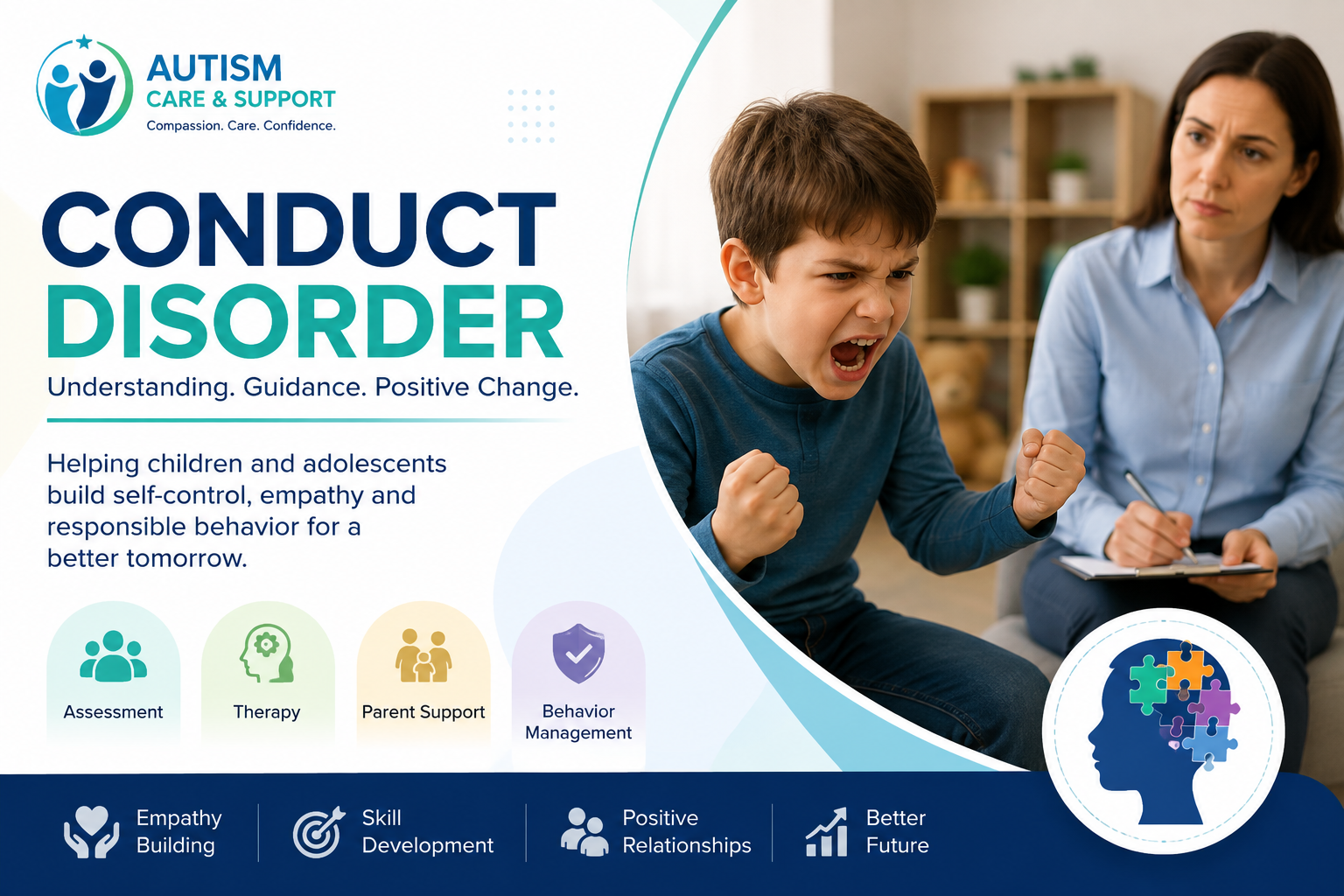
Conduct Disorder (CD) is a childhood and adolescent behavioural and emotional disorder characterized by a persistent pattern of behaviours that violate the rights of others or age-appropriate social rules and norms. Children with Conduct Disorder may show aggression, destruction of property, lying or stealing, and serious rule violations.
Occasional anger, disobedience or mischief can occur during normal development. Conduct Disorder is considered when behaviours are persistent, serious, and significantly interfere with the child’s functioning at home, school or in the community.
Early assessment and appropriate support can help children and families understand the underlying difficulties and develop healthier behavioural and social skills.
-
What is Conduct Disorder?
Conduct Disorder is a behavioural disorder that can occur during childhood or adolescence. A child with CD may repeatedly have difficulty following rules, respecting the rights of others, controlling aggressive behaviour or understanding the consequences of their actions.
Conduct Disorder is more than ordinary childhood mischief or occasional disobedience. The behaviours are generally repetitive, persistent and more serious than expected for the child’s developmental age.
-
Signs and Symptoms of Conduct Disorder
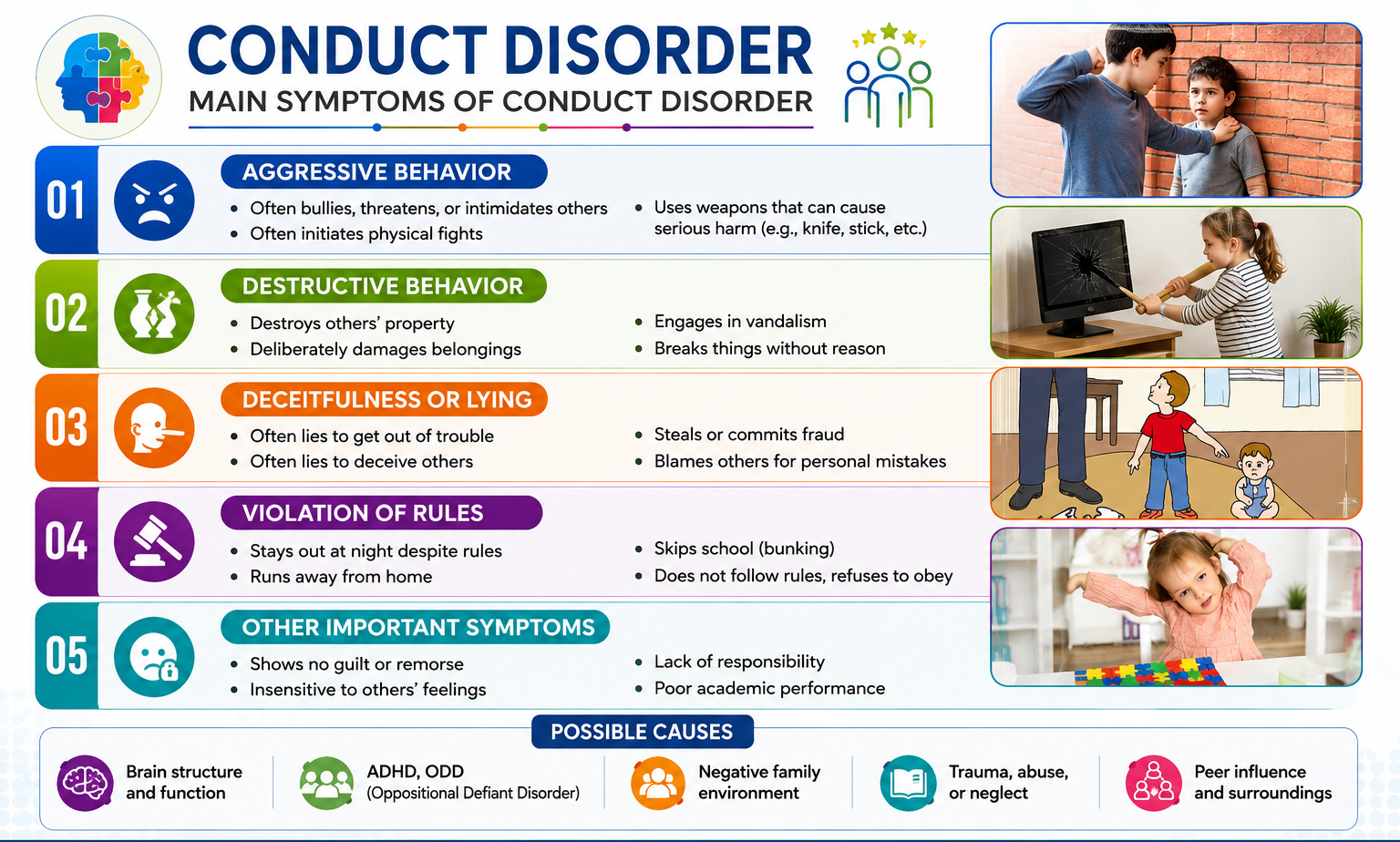
The symptoms of Conduct Disorder are commonly grouped into four major areas.
1. Aggressive Behaviour
A child may:
- Frequently fight with other children
- Bully, threaten or intimidate others
- Become physically aggressive
- Show cruelty towards people or animals
- Use aggression to obtain something from another person
- Repeatedly display threatening behaviour
2. Destructive Behaviour
Possible signs include:
- Deliberately damaging other people’s property
- Breaking or destroying objects
- Intentionally damaging belongings at home or school
- Setting fires with an intention to cause damage
3. Deceitfulness, Lying or Stealing
A child may:
- Frequently lie to obtain something or avoid responsibilities
- Steal objects
- Take things without permission
- Repeatedly deceive parents, teachers or others
- Hide inappropriate behaviour from adults
4. Serious Violation of Rules
Examples may include:
- Repeatedly breaking important household or school rules
- Frequently staying away from school
- Running away from home
- Repeatedly ignoring age-appropriate boundaries or rules
- Persistent rule-breaking despite consequences
5. Other Behavioural Signs to Watch For
Parents and teachers may also notice:
- Lack of remorse or guilt after seriously hurting others
- Difficulty accepting responsibility for behaviour
- Frequent conflicts with parents, teachers or peers
- Poor anger control
- Difficulty understanding consequences
- Problems maintaining friendships
- Declining school performance
- Repeated disciplinary problems
- Difficulty following social expectations
These signs should be considered in the context of the child’s age, developmental stage, environment and overall functioning rather than being used alone to diagnose Conduct Disorder.
What Causes Conduct Disorder?
There is no single cause of Conduct Disorder. Behavioural difficulties can develop through an interaction of biological, developmental, psychological and environmental factors.
Possible Contributing Factors
These may include:
- Family conflict or difficult family relationships
- Exposure to trauma or stressful life experiences
- Abuse or neglect
- Inconsistent supervision or discipline
- Learning difficulties
- Developmental or language difficulties
- Difficulties with emotional regulation
- Negative peer influence
- School-related difficulties
- Certain genetic or biological vulnerabilities
Having one of these factors does not mean that a child will develop Conduct Disorder.
Conduct Disorder and Other Childhood Conditions
Conduct Disorder may occur alongside other developmental, behavioural or mental-health difficulties.
Conditions That May Co-Occur
These can include:
- ADHD (Attention-Deficit/Hyperactivity Disorder)
- Oppositional Defiant Disorder (ODD)
- Learning difficulties
- Anxiety disorders
- Depression
- Post-traumatic stress disorder (PTSD)
- Substance-use problems in adolescents
A comprehensive assessment is important because treating associated difficulties may be an important part of the overall support plan.
Watch this video to know about conduct disorder click here
Conduct Disorder Assessment
Conduct Disorder should be assessed by a qualified child and adolescent mental-health professional.
What May Be Considered During Assessment?
The assessment may include:
- Detailed history of the child’s behaviour
- Parent and caregiver interviews
- Information from teachers or school
- Developmental history
- Academic and learning difficulties
- Social and family environment
- Emotional and psychological factors
- Screening for co-occurring conditions
- Assessment of the frequency, severity and settings in which behaviours occur
A comprehensive assessment helps distinguish Conduct Disorder from other behavioural or developmental conditions and from age-appropriate behaviour.
Treatment for Conduct Disorder in Children
Treatment is generally individualized according to the child’s age, symptoms, severity, family circumstances and co-occurring conditions.
Evidence-based approaches may include behavioural therapy, individual psychotherapy, parent management training, family therapy and social-skills interventions.
1. Behavioural Therapy
Behavioural approaches can help children:
- Understand the connection between actions and consequences
- Develop appropriate responses to difficult situations
- Improve anger and behaviour management
- Learn problem-solving skills
- Develop positive social behaviours
2. Parent Management Training
Parents and caregivers can learn practical strategies to:
- Set clear and consistent expectations
- Reinforce positive behaviour
- Respond appropriately to challenging behaviour
- Establish predictable routines
- Improve parent-child communication
3. Family Therapy
Family-based support can help improve:
- Communication
- Parent-child relationships
- Conflict management
- Family routines
- Consistent behavioural expectations
4. Social Skills Training
Children may be supported in developing:
- Communication skills
- Emotional regulation
- Problem-solving
- Empathy
- Conflict-resolution skills
- Positive peer interactions
5. Treatment of Co-Occurring Conditions
When conditions such as ADHD, anxiety, depression or learning difficulties are also present, they may require their own assessment and treatment. Medication may sometimes be considered for specific associated conditions or symptoms, but it should be prescribed and monitored by an appropriate healthcare professional.
-
How Parents Can Support a Child with Conduct Disorder
Parents can play an important role in supporting positive behavioural change.
Helpful Strategies
- Maintain clear and consistent household rules
- Reinforce positive behaviour
- Use age-appropriate consequences
- Maintain regular routines
- Communicate calmly and clearly
- Work closely with teachers and therapists
- Avoid labelling the child as “bad” or “naughty”
- Encourage appropriate social interaction
- Seek professional help when behaviour becomes persistent or unsafe
Early intervention and comprehensive support can improve the child’s opportunity to develop healthier behavioural patterns.
When Should Parents Seek Professional Help?
Parents should consider professional evaluation when behavioural difficulties:
- Continue for weeks or months
- Occur repeatedly
- Interfere with school performance
- Cause serious family conflict
- Affect relationships with peers
- Involve aggression or property destruction
- Include repeated stealing or serious rule-breaking
- Create safety concerns for the child or others
NIMH recommends seeking professional help when emotional or behavioural problems persist and interfere with a child’s functioning at home, school or with friends.
Conduct Disorder Support at Nirmal Autism and Learning Disability Education Center
At Nirmal Autism and Learning Disability Education Center, Miraj, children with behavioural concerns can be evaluated to better understand their individual developmental, emotional, learning and behavioural needs.
Support may be planned according to the child’s specific requirements and may involve:
- Behavioural assessment
- Individualized intervention planning
- Behaviour management support
- Parent guidance
- Social-skills development
- Learning support
- Family involvement
- Coordination with school when appropriate
The exact intervention plan should be decided after a professional assessment of the child.
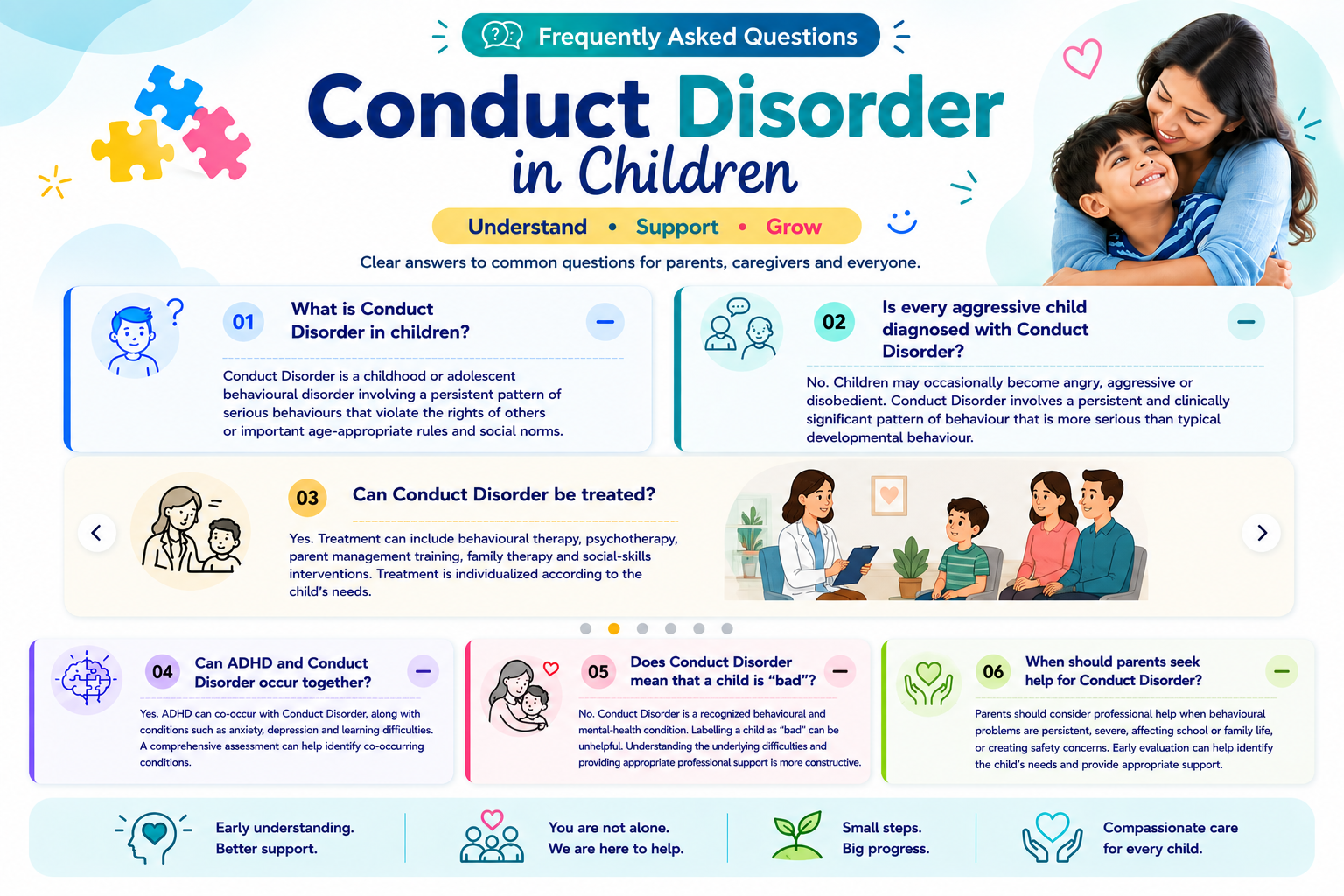
Frequently Asked Questions About Conduct Disorder
Conclusion
Conduct Disorder can affect a child’s behaviour, relationships, education and family life. Persistent aggression, destruction, lying, stealing or serious rule-breaking should not simply be dismissed as bad behaviour.
Early assessment, family involvement and appropriate behavioural and psychological support can help children develop healthier ways of managing emotions, relationships and behaviour.