Occupational Therapy for Autism in Miraj | Fine Motor, Sensory & Daily Living Skills
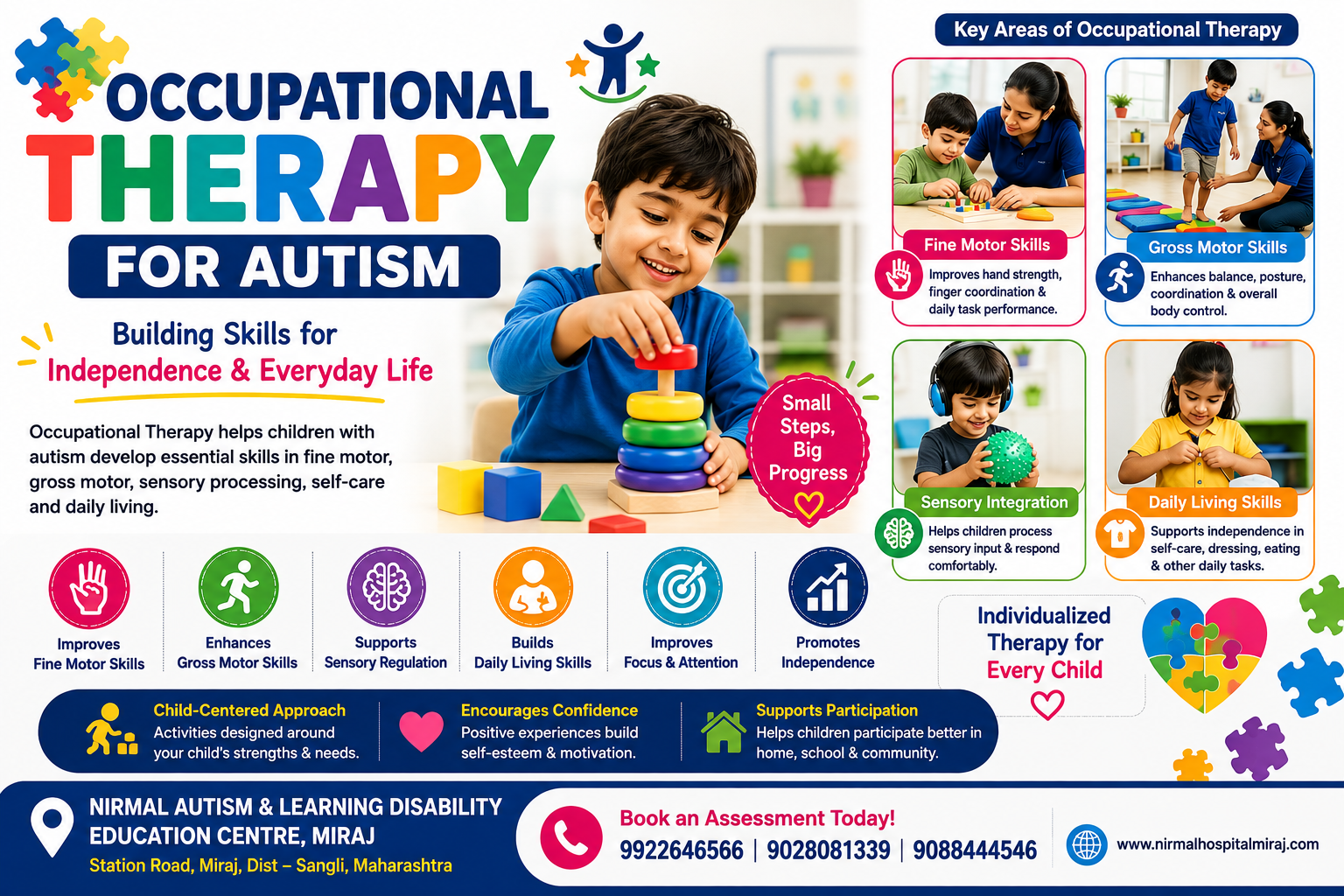
Occupational Therapy (OT) is a child-centred therapy that helps children develop the skills they need to participate more independently in everyday activities.
For children with Autism Spectrum Disorder (ASD), occupational therapy may focus on areas such as fine motor skills, gross motor skills, sensory processing, self-care, play, attention, coordination and daily living activities.
The therapy program is individualized according to the child’s developmental level, strengths, challenges and functional needs.
What is Occupational Therapy?
OT helps children develop skills required for meaningful everyday activities, often called occupations.
For children, these activities may include:
- Playing
- Learning
- Eating
- Dressing
- Writing
- Using school materials
- Communicating during activities
- Personal hygiene
- Participating in family routines
- Interacting with peers
An occupational therapist assesses the child’s abilities and develops appropriate activities to improve functional participation and independence.
Occupational Therapy for Autism
Children with autism may experience differences in:
- Sensory processing
- Motor coordination
- Fine motor development
- Gross motor skills
- Attention and participation
- Self-care
- Play skills
- Handwriting
- Body awareness
- Planning and sequencing activities
OT can be incorporated into a broader autism intervention plan when these areas affect the child’s everyday functioning.
The therapy goals should be individualized rather than based only on the child’s diagnosis.
To know about Autism Click Here
How Can Occupational Therapy Help Children with Autism?
OT may support children in several important developmental areas.
1. Fine Motor Skills
Fine motor skills involve the coordinated use of the small muscles of the hands and fingers.
OT activities may help children practise:
- Holding pencils and crayons
- Drawing and colouring
- Cutting with scissors
- Buttoning and unbuttoning
- Using zippers
- Picking up small objects
- Building with blocks
- Using classroom tools
- Hand strength and finger coordination
Improved fine motor skills can help children participate more effectively in school and self-care activities.
2. Gross Motor Skills
Gross motor skills involve larger body movements and coordination.
OT activities may include:
- Balance activities
- Climbing
- Jumping
- Throwing and catching
- Obstacle courses
- Ball activities
- Body coordination exercises
- Movement-based play
- Postural control activities
These activities can support coordination, body awareness and participation in age-appropriate physical activities.
3. Sensory Processing and Sensory Integration
Some children with autism may respond differently to sensory information such as:
- Sound
- Touch
- Movement
- Light
- Smell
- Taste
- Body position
Occupational therapists may assess how sensory processing differences affect the child’s participation in everyday activities.
Based on the assessment, appropriate sensory-based activities may be incorporated into the child’s individualized therapy program.
The goal is to help the child participate more comfortably and effectively in meaningful activities.
4. Activities of Daily Living
OT can help children practise everyday self-care skills such as:
- Eating independently
- Drinking from a cup
- Dressing
- Wearing shoes
- Brushing teeth
- Washing hands
- Toilet routines
- Personal hygiene
- Using utensils
- Organizing personal belongings
These skills can contribute to greater independence at home, school and in the community.
5. Handwriting and Pre-Writing Skills
For children who have difficulty with writing, OT may address foundational skills such as:
- Pencil grasp
- Hand strength
- Finger control
- Hand-eye coordination
- Drawing basic shapes
- Tracing
- Letter formation
- Writing posture
- Visual-motor coordination
Activities are adapted according to the child’s developmental level and school requirements.
6. Attention and Participation
Some children may find it difficult to remain engaged in activities for an age-appropriate period.
OT may incorporate structured activities to support:
- Sustained attention
- Following activity routines
- Completing tasks
- Sitting and participating
- Transitioning between activities
- Visual attention
- Motor planning
- Task organization
The activities should be meaningful and appropriate for the child’s abilities.
7. Motor Planning and Coordination
Motor planning refers to the ability to think about, organize and carry out a movement.
Children may need support with:
- Learning new movements
- Sequencing activities
- Coordinating both sides of the body
- Imitating movements
- Completing multi-step tasks
- Navigating play equipment
- Performing unfamiliar activities
Occupational therapy can use structured play and movement activities to practise these skills.
Occupational Therapy Assessment
Before starting therapy, an occupational therapist may assess areas such as:
- Fine motor skills
- Gross motor abilities
- Sensory processing
- Visual-motor skills
- Hand-eye coordination
- Self-care abilities
- Attention and participation
- Play skills
- Postural control
- Functional performance
The assessment helps identify the child’s strengths and areas where additional support may be useful.
1. Individualized Occupational Therapy Program
Every child with autism is different.
Therefore, an occupational therapy program should consider:
- Age
- Developmental level
- Communication abilities
- Motor skills
- Sensory preferences
- Learning needs
- Daily routines
- School requirements
- Family priorities
- Child’s interests
Individualized Goals May Include:
- Improve pencil control
- Develop hand strength
- Improve dressing skills
- Increase independence in self-care
- Improve coordination
- Participate in play activities
- Improve task participation
- Develop motor planning
- Support sensory regulation
2. Play-Based Occupational Therapy
Play is an important way children learn and practise developmental skills.
Occupational therapists may use activities such as:
- Puzzles
- Blocks
- Drawing
- Colouring
- Ball games
- Building activities
- Matching games
- Threading and bead activities
- Clay and play-dough
- Obstacle courses
- Pretend play
These activities can make therapy engaging while targeting specific functional skills.
3. Occupational Therapy for Sensory Needs
Some children may become uncomfortable or overwhelmed by particular sensory experiences.
For example, a child may have difficulty with:
- Loud sounds
- Certain clothing textures
- Crowded environments
- Hair cutting
- Tooth brushing
- Certain food textures
- Movement
- Touch
An occupational therapist can assess the child’s sensory responses and develop an individualized plan to support participation in everyday routines.
Occupational Therapy and Autism: What Are the Goals?
The goal of OT is not to change a child’s personality or eliminate autistic characteristics.
Instead, therapy should focus on meaningful functional outcomes such as:
- Greater independence
- Better participation
- Improved self-care
- Development of motor skills
- Increased engagement in activities
- Improved access to learning
- Participation in play
- Support for everyday routines
Parent Involvement in Occupational Therapy
Parents and caregivers can play an important role in helping children practise skills outside therapy sessions.
Therapists may guide parents on how to:
- Encourage self-care
- Practise motor activities at home
- Establish predictable routines
- Support participation in daily activities
- Provide appropriate opportunities for practice
- Adapt activities according to the child’s abilities
Regular practice in natural environments can help children use their skills beyond the therapy room.
Occupational Therapy and Other Autism Therapies
OT may form part of a multidisciplinary autism intervention plan.
Depending on the child’s individual needs, other interventions may include:
- ABA-based intervention
- Speech and Language Therapy
- Special Education
- Remedial Therapy
- Sensory-based interventions
- Play Therapy
- Parent Training
- Psychological support
A multidisciplinary approach can address different areas of a child’s development.
Benefits of Occupational Therapy for Children
Individualized OT may help support:
- Fine motor development
- Gross motor coordination
- Hand-eye coordination
- Self-care skills
- Daily living skills
- Sensory processing and participation
- Attention and engagement
- Motor planning
- Play skills
- School participation
- Independence
The specific goals and expected outcomes vary from child to child.
Who May Benefit from Occupational Therapy?
OT may be considered for children experiencing difficulties with:
- Autism Spectrum Disorder
- Developmental delays
- Fine motor skills
- Gross motor coordination
- Sensory processing
- Self-care
- Handwriting
- Attention and participation
- Motor planning
- Functional daily activities
- School-related activities
A professional assessment is recommended to identify the child’s specific needs.
Frequently Asked Questions About Occupational Therapy
1. What is Occupational Therapy for children?
Occupational Therapy is a therapy that helps children develop skills needed for everyday activities, learning, play, self-care and participation.
2. Can Occupational Therapy help children with Autism?
Yes. Occupational therapy may help children with autism who experience difficulties affecting areas such as fine motor skills, self-care, sensory processing, coordination, play or daily participation.
3. Does Occupational Therapy cure Autism?
No. Occupational therapy does not cure autism. It focuses on supporting functional skills, independence, participation and quality of life.
4. What age can a child start Occupational Therapy?
Occupational therapy can be considered at different childhood ages depending on the child’s developmental needs. The activities and goals are adapted to the child’s age and abilities.
5. How long does Occupational Therapy take?
The duration and frequency vary according to the child’s goals, needs, response to intervention and progress.
6. Is Sensory Integration part of Occupational Therapy?
Sensory-based activities may be incorporated into occupational therapy when assessment indicates that sensory processing differences are affecting the child’s functional participation.
7. Can Occupational Therapy help with handwriting?
Yes. OT may address foundational skills related to handwriting, including pencil grasp, hand strength, visual-motor coordination, posture and fine motor control.
8. Can parents participate in Occupational Therapy?
Yes. Parent involvement can help children practise functional skills and strategies in everyday environments.
Occupational Therapy at Nirmal Autism & Learning Disability Education Centre, Miraj
At Nirmal Autism & Learning Disability Education Centre, Miraj, occupational therapy programs are planned according to each child’s individual developmental and functional needs.
Therapy may focus on:
- Fine Motor Skills
- Gross Motor Skills
- Sensory Processing
- Self-Care Skills
- Daily Living Skills
- Hand-Eye Coordination
- Motor Planning
- Attention and Participation
- Play Skills
- School Readiness
Our child-centred approach focuses on helping children participate more independently in activities at home, school and in the community.
When Should Parents Consider an Occupational Therapy Assessment?
Parents may consider an OT assessment if their child has difficulty with:
- Holding or using a pencil
- Dressing independently
- Eating with utensils
- Brushing teeth
- Hand washing
- Playing with age-appropriate toys
- Coordinating movements
- Sitting and participating in activities
- Coping with certain sensory experiences
- Completing everyday tasks
- Developing age-appropriate self-care skills
An assessment can help identify the child’s strengths and areas where occupational therapy may provide support.