Autism Therapy: Benefits, Types of Therapy & How It Helps Children
Autism Spectrum Disorder (ASD) can affect communication, social interaction, behaviour, learning and everyday functioning. Every child with autism has different strengths, challenges and developmental needs, so therapy and educational support should be planned according to the individual child.
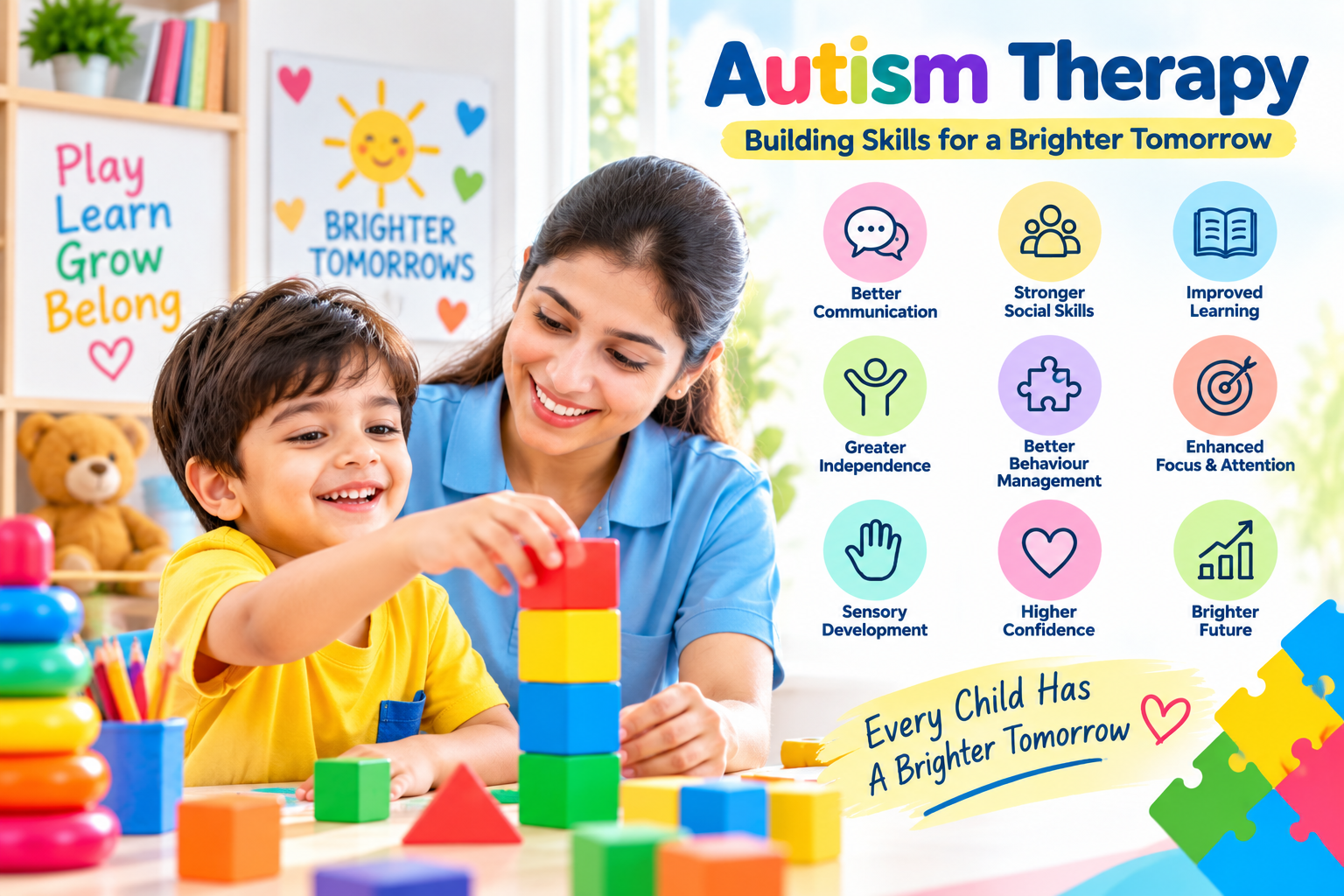
Autism therapy can help children develop important skills such as communication, social interaction, learning, self-care, sensory regulation and functional independence. The type and intensity of support may vary depending on the child’s developmental profile and goals.
What Is Autism Therapy?
Autism therapy refers to a range of therapeutic, behavioural, developmental and educational approaches that can support children with Autism Spectrum Disorder.
The goal is not simply to change a child’s behaviour. Appropriate intervention focuses on helping children communicate, learn, participate, become more independent and engage with their environment.
Why Is Individualized Therapy Important?
Every child with autism is different.
One child may primarily need support with speech and communication, while another may need help with sensory processing, social interaction, learning or daily living skills.
Therefore, therapy should consider:
- Child’s developmental level
- Communication abilities
- Learning needs
- Social skills
- Behavioural concerns
- Sensory needs
- Motor skills
- Daily living skills
- Individual developmental goals
Explore Autism Therapy – Click Here
What Are the Benefits of Autism Therapy?
Appropriate therapy and educational support may help children develop skills across different areas of development.
1. Improves Communication Skills
Communication support can help children express their needs, understand language and participate more effectively in interactions.
Depending on the child’s needs, therapy may focus on:
- Expressive communication
- Understanding language
- Functional communication
- Gestures
- Social communication
- Vocabulary development
- Communication during everyday activities
2. Supports Social Interaction
Some children with autism experience difficulty understanding social cues or participating in social activities.
Therapeutic and educational activities may help children practise:
- Taking turns
- Sharing
- Joint activities
- Responding to others
- Social communication
- Playing with peers
- Understanding basic social situations
3. Supports Learning and Development
Therapy and special education can provide structured opportunities for children to learn according to their individual abilities.
Support may include:
- Attention and engagement
- Following instructions
- Academic readiness
- Matching and sorting
- Problem-solving
- Pre-academic skills
- Functional learning
4. Helps Develop Daily Living Skills
Therapy can also focus on skills required for everyday independence.
These may include:
- Eating
- Dressing
- Grooming
- Toileting
- Hand washing
- Following routines
- Organizing personal belongings
- Participating in daily activities
5. Supports Sensory Processing
Some children with autism may respond differently to sounds, touch, movement, light, smell or other sensory experiences.
Sensory-focused support may help a child participate more comfortably in activities when appropriately planned according to individual needs.
6. Develops Fine Motor Skills
Some therapeutic activities can support:
- Hand coordination
- Pencil skills
- Drawing
- Cutting
- Writing readiness
- Manipulating objects
- Hand-eye coordination
7. Encourages Play Skills
Play is an important part of childhood development.
Play-based activities can provide opportunities to develop:
- Communication
- Imagination
- Social interaction
- Turn-taking
- Attention
- Problem-solving
- Motor skills
8. Supports Functional Independence
A major goal of individualized intervention can be helping children become more independent in everyday situations.
Therapy can work toward skills that help children participate at home, school and in the community.
How Does Autism Spectrum Disorder (ASD) Affect a Child’s Development? click here
Types of Autism Therapy and Support
Different children may benefit from different combinations of therapy and educational support.
ABA Therapy
Applied Behavior Analysis (ABA) uses principles of learning and behaviour to teach skills and support meaningful behaviour change.
Depending on the child’s individual goals, intervention may focus on:
- Communication
- Social skills
- Learning
- Daily living skills
- Functional behaviours
- Following instructions
- Skill development
What Are the Benefits of ABA Therapy?
ABA-based intervention may help children practise specific skills in a structured and measurable way, depending on their individual needs and goals.
Speech and Language Therapy
Speech and language therapy focuses on communication and language development.
Speech Therapy May Help With:
- Speech development
- Understanding language
- Expressive language
- Functional communication
- Social communication
- Communication of needs
Sensory Integration Therapy
Some children experience sensory processing differences that affect their daily activities.
Sensory-focused occupational therapy may use individualized activities based on the child’s sensory needs.
Areas That May Be Addressed
- Touch sensitivity
- Sound sensitivity
- Movement
- Body awareness
- Motor planning
- Participation in everyday activities
Play Therapy and Play-Based Intervention
Play can be used as a natural way of encouraging communication, interaction and learning.
Possible Areas of Development
- Social interaction
- Communication
- Sharing
- Turn-taking
- Attention
- Imaginative play
- Emotional expression
Remedial Therapy
Remedial support can help children who experience difficulties with particular learning skills.
Areas May Include:
- Reading
- Writing
- Basic mathematics
- Attention
- Learning readiness
- Academic skills
- Study-related skills
Special Education
Special education can provide individualized learning opportunities based on the child’s abilities and educational needs.
Special Education May Focus On:
- Academic skills
- Communication
- Classroom readiness
- Functional learning
- Social skills
- Independent learning
Does Every Child With Autism Need the Same Therapy?
No.
Autism is a spectrum, and children can have very different strengths and support needs.
One child may require greater communication support, while another may need assistance with sensory processing, learning, social interaction or daily living skills.
Why Individual Assessment Matters
Before planning therapy, professionals can consider the child’s:
- Developmental history
- Communication
- Behaviour
- Learning abilities
- Social interaction
- Sensory needs
- Daily living skills
- Strengths and challenges
This helps create an individualized intervention plan.
When Should Parents Consider Autism Therapy?
Parents may consider professional guidance when they notice persistent concerns related to:
- Speech delay
- Difficulty communicating
- Limited response to name
- Social interaction
- Repetitive behaviours
- Difficulty with changes in routine
- Sensory responses
- Learning difficulties
- Daily living skills
- Behavioural concerns
Does a Child Need an Autism Diagnosis Before Therapy?
This can depend on the type of service and the child’s individual situation. Parents who have developmental concerns should discuss them with an appropriately qualified professional to understand whether an assessment or specific intervention is appropriate.
How Early Intervention Can Help
Early developmental support can help families understand a child’s strengths and areas requiring additional support.
Benefits of Starting Support Early
Early intervention may provide opportunities to work on:
- Communication
- Social interaction
- Learning
- Play
- Adaptive skills
- Daily living skills
- Functional independence
The specific goals should be based on the individual child rather than a fixed therapy plan.
What Role Do Parents Play in Autism Therapy?
Parents are an important part of the intervention process.
Continue Therapy Goals at Home
Parents can reinforce appropriate skills through everyday activities such as:
- Talking with the child
- Reading stories
- Playing together
- Practising communication
- Following daily routines
- Encouraging self-care
- Practising learned skills
H3: Maintain Communication With Therapists
Regular communication between parents, therapists and educators can help maintain consistency between home, school and therapy environments.
How Long Does Autism Therapy Take to Show Benefits?
There is no fixed timeline for every child.
Progress can depend on:
- Child’s developmental profile
- Individual therapy goals
- Frequency of intervention
- Consistency of support
- Family involvement
- Learning environment
- Individual response to intervention
Parents should focus on individual progress rather than comparing one child with another.
Can Autism Therapy Cure Autism?
Autism is a neurodevelopmental condition, and there is no single therapy that guarantees a cure.
The purpose of appropriate intervention is to support the child’s communication, learning, social participation, adaptive skills and independence according to their individual needs.
Parents should be cautious about treatments that promise to completely “cure” autism.
How to Choose the Right Autism Therapy Centre?
Parents may consider several factors when choosing a therapy centre.
Look for Individualized Assessment
The centre should understand the child’s individual strengths and challenges rather than applying exactly the same program to every child.
Look for a Multidisciplinary Approach
Depending on the child’s needs, different professionals and educational supports may work together.
Parent Involvement
Parents should receive guidance on how to support developmental goals at home.
Regular Progress Monitoring
Therapy goals should be reviewed periodically based on the child’s progress and changing needs.
Autism Therapy at Nirmal Autism & Learning Disability Education Centre, Miraj
Nirmal Autism & Learning Disability Education Centre provides developmental, therapeutic and educational support for children based on their individual needs. The centre’s autism-related support includes approaches such as ABA therapy, sensory integration, play therapy, remedial therapy and special education.
Our focus is on helping children build meaningful skills in areas such as communication, learning, social interaction, sensory regulation and everyday independence.
Our Autism Therapy & Educational Support
- ABA Therapy
- Sensory Integration
- Play Therapy
- Remedial Therapy
- Special Education
- Parent Guidance
- Individualized Learning Support
Our Approach
Every child has a unique developmental profile. Our approach focuses on understanding the child’s needs and working toward practical developmental goals through appropriate therapy and educational support.
Frequently Asked Questions About Autism Therapy
What is autism therapy?
Autism therapy refers to therapeutic, developmental, behavioural and educational interventions designed to support children with autism according to their individual needs.
What are the benefits of autism therapy?
Depending on the child and intervention, therapy may support communication, social interaction, learning, sensory regulation, motor skills, daily living skills and functional independence.
Is ABA therapy suitable for every child?
ABA-based intervention may be considered depending on the child’s individual needs and goals. A qualified professional should determine the appropriate approach.
Can autism therapy improve speech?
Speech and communication support can help children develop communication skills, but progress varies between children.
Can sensory therapy help children with autism?
Sensory-focused intervention may be considered for children experiencing sensory processing difficulties, based on individual assessment and needs.
How often should my child attend therapy?
Therapy frequency should be determined according to the child’s individual needs, goals, developmental profile and professional recommendations.
Can parents participate in autism therapy?
Yes. Parent participation and consistent practice of appropriate skills at home can complement therapy and educational support.
Looking for Autism Therapy in Miraj?
If you are looking for Autism Therapy in Miraj, professional assessment can help you understand your child’s developmental strengths, challenges and support needs.
Nirmal Autism & Learning Disability Education Centre
Miraj, Maharashtra
Our team provides autism-related therapy, educational support and parent guidance based on individual developmental needs.